How many calories are in a homemade burger?
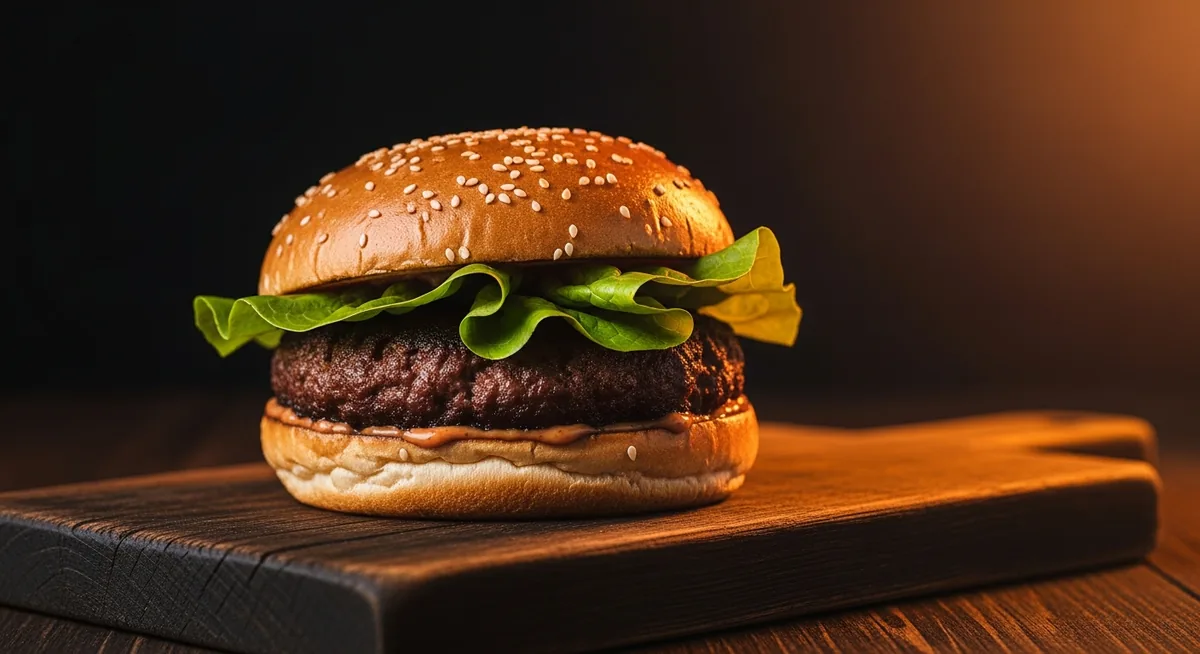
A classic homemade cheeseburger with a 150-gram (5.3 oz) patty, brioche bun, cheddar, lettuce, tomato, and sauces delivers around 720 calories, according to the German BLS food database. A leaner build with extra-lean beef (5% fat) and a light bun comes to around 550 calories.
Calories component by component
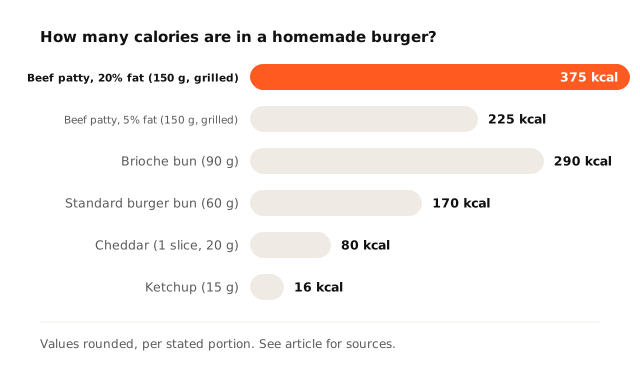
| Component | Calories |
|---|---|
| Beef patty, 20% fat (150 g, grilled) | 375 kcal |
| Beef patty, 5% fat (150 g, grilled) | 225 kcal |
| Brioche bun (90 g) | 290 kcal |
| Standard burger bun (60 g) | 170 kcal |
| Cheddar (1 slice, 20 g) | 80 kcal |
| Ketchup (15 g) | 16 kcal |
| Mayo (15 g) | 105 kcal |
| BBQ sauce (15 g) | 25 kcal |
What really drives the calories
The two biggest calorie drivers in a burger are the patty’s fat content and the bun. A patty made from regular 20% fat ground beef contains around 150 more calories than the same amount of extra-lean beef (5%). A brioche bun adds roughly 120 calories over a standard bun, thanks to its butter and egg yolk. Stack two patties on a brioche bun and your burger quickly passes 1,000 calories.
Burger variations compared
A chicken burger with grilled chicken breast lands at around 520 calories — mainly because chicken breast, at 110 calories per 100 grams, carries far less fat than ground beef. A veggie burger built on beans or soy comes to 450 to 600 calories depending on the recipe, though often with extra oil for binding. Smash burgers with two thin patties sit at around 850 calories, since the second patty doubles the protein — but also the fat.
Burgers and muscle growth
A homemade burger with a 150-gram patty provides around 35 grams of high-quality protein. Per the ISSN position stand on protein intake, that is roughly the sweet spot for a post-workout meal. In a strength-training context, a burger is therefore a perfectly workable meal — as long as your total daily calorie budget matches your goal.
Start tracking calories with GymLog AI
GymLog AI recognizes burgers in a photo, tells patty, bun, and sauces apart, and automatically logs each component against your daily budget.
Download on the App StoreSources
- USDA FoodData Central. Beef, ground, 80% lean / 20% fat, cooked. fdc.nal.usda.gov
- Max Rubner Institute. Bundeslebensmittelschlüssel (BLS), version 3.02 — Germany’s national food composition database. blsdb.de
- Jäger, R., et al. (2017). International Society of Sports Nutrition Position Stand: protein and exercise. JISSN. PubMed
- German Federal Center for Nutrition (BZfE). Meat — product guide. bzfe.de