Cardio or strength training for weight loss?
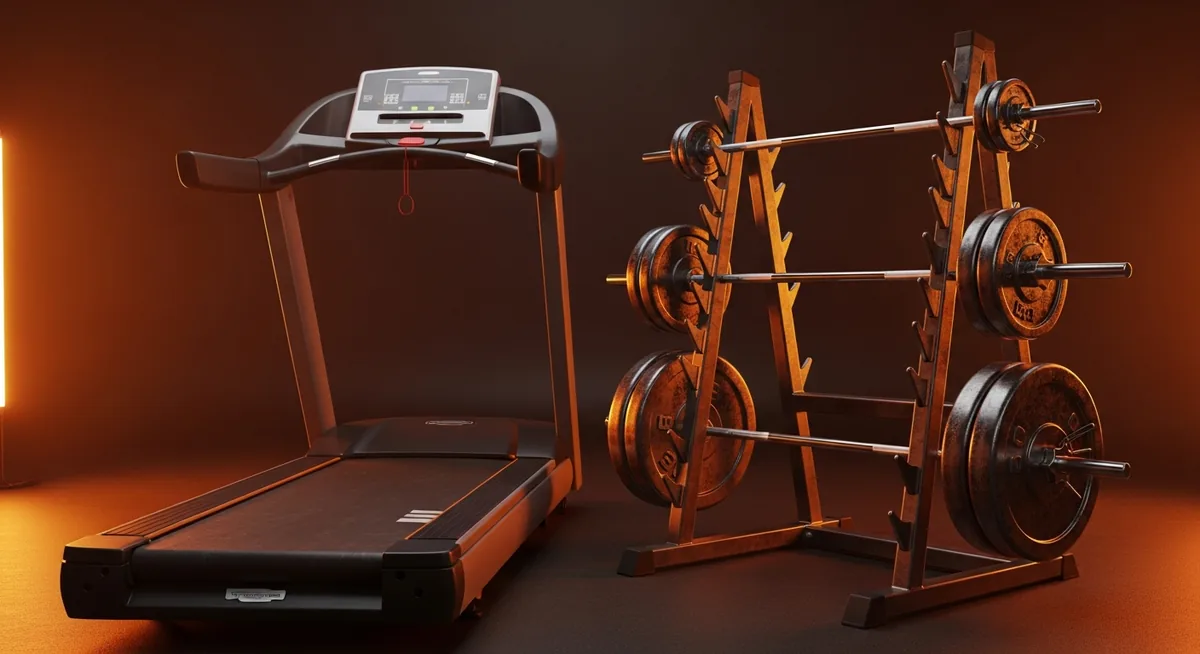
For fat loss, a combination of strength and endurance training is what most experts recommend. Strength training is discussed mainly for its role in preserving muscle mass during a diet, while cardio drives up your total energy expenditure.
Why strength training is central
Willis et al. (2012) ran a randomized trial comparing three groups over eight months: cardio only, strength training only, and a combination of both. The combination group lost the most body fat while holding on to the most muscle. Cardio alone did produce weight loss — but with significant muscle loss along the way.
The role of cardio
A meta-analysis by Wewege et al. (2017) found that high-intensity interval training (HIIT) and moderate-intensity continuous training (MICT) produce comparable fat-loss results. Cardio raises your daily energy expenditure and improves cardiovascular health on top of the calorie deficit itself.
Plan your deficit with GymLog AI
GymLog AI tracks calories and training together and shows you how both factors shape your progress.
Download on the App StoreSources
- Willis, L. H., et al. (2012). Effects of aerobic and/or resistance training on body mass and fat mass in overweight or obese adults. J Appl Physiol, 113(12). PubMed
- Wewege, M., et al. (2017). The effects of high-intensity interval training vs. moderate-intensity continuous training on body composition in overweight and obese adults: a systematic review and meta-analysis. Obes Rev, 18(6). PubMed