How do you lose weight healthily?
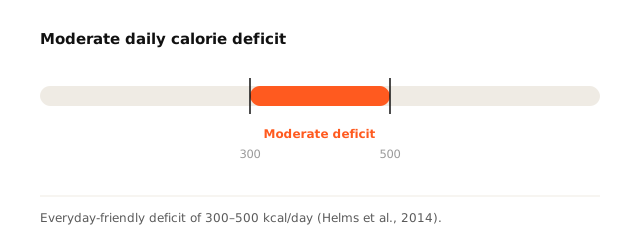
For sustainable, everyday weight loss, the usual combination is a moderate calorie deficit of 300 to 500 kcal per day, enough protein, and strength training.
Weight loss timeline calculator
Estimate based on 1 kg of body fat ≈ 7,700 kcal (Hall et al., 2011).
The foundation: a moderate calorie deficit
A calorie deficit is the non-negotiable prerequisite for fat loss (Hall, 2018). The scientific literature on natural body composition recommends losing 0.5 to 1 percent of body weight per week (Helms et al., 2014). In practice, that range is achieved with a deficit of roughly 300 to 500 kilocalories below your individual daily requirement.
Protein protects your lean body mass
In a calorie deficit, the body also breaks down muscle mass if it lacks a sufficient training stimulus and enough building material. During dieting phases, higher protein intakes (around 1.8 to 2.4 g/kg of body weight) combined with strength training are frequently discussed in connection with preserving fat-free mass (Helms et al., 2014).
The three key levers
| Lever | Effect |
|---|---|
| Moderate deficit | 0.5–1% / week |
| Protein 1.8–2.4 g/kg | commonly used range in dieting phases |
| Strength training | commonly used training stimulus while dieting |
Why crash diets so often fail
The long-term study by Fothergill et al. (2016) on former contestants of the TV show "The Biggest Loser" shows that very aggressive weight loss can lead to lasting downward adaptations of resting metabolic rate. The slowed energy expenditure after the diet ends sets the stage for regaining weight — the classic pattern of the yo-yo effect. In practice, a moderate approach combined with strength training is usually the preferred route.
Plan your deficit with GymLog AI
GymLog AI calculates your calorie and protein targets for a moderate, muscle-sparing diet and tracks your progress.
Download on the App StoreSources
- Hall, K. D. (2018). Energy balance and its components. American Journal of Clinical Nutrition. PubMed
- Helms, E. R., et al. (2014). Recommendations for natural bodybuilding contest preparation: resistance and cardiovascular training. JISSN. jissn.biomedcentral.com
- Fothergill, E., et al. (2016). Persistent metabolic adaptation 6 years after The Biggest Loser competition. Obesity. PubMed
- German Nutrition Society (DGE). Evidence-based guideline on fat intake and prevention. dge.de