Muscle soreness after a workout — normal and a good sign?
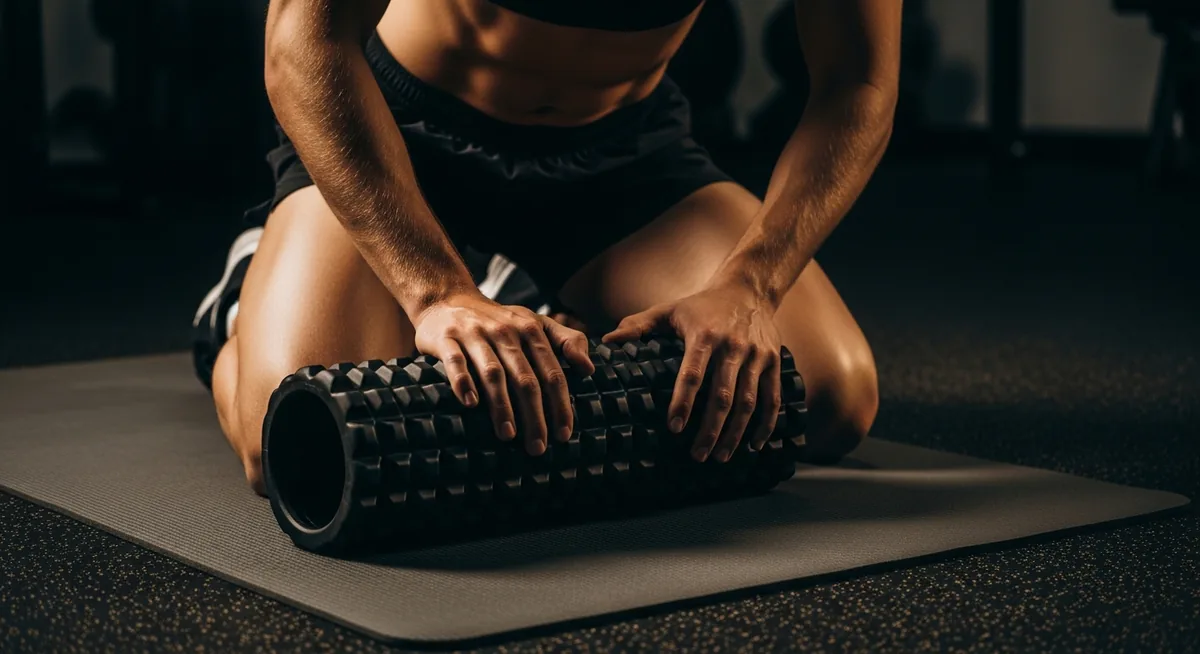
Muscle soreness (DOMS) is a normal response to unfamiliar training, especially after eccentric work. It is, however, not a reliable indicator of effective muscle growth.
What muscle soreness really is
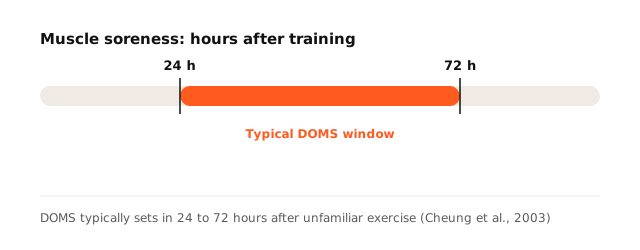
Delayed Onset Muscle Soreness (DOMS) is the delayed muscle pain that typically sets in 24 to 72 hours after unfamiliar exercise. For a long time, lactic acid was blamed — but lactate is cleared within a few hours. Soreness typically follows unfamiliar or heavily eccentric loading (the lowering phase) and is described in the literature as a normal response to training stress (Cheung et al., 2003).
Soreness and muscle growth
In their review, Schoenfeld & Contreras (2013) emphatically point out that muscle soreness is not an indicator of effective hypertrophy training. Trained lifters develop far less DOMS from the same workloads — without any drop in the hypertrophy stimulus. The body adapts through the so-called “repeated bout effect” within just a few sessions.
When soreness shows up
DOMS mainly occurs in three situations: unfamiliar exercises, a higher eccentric emphasis (e.g. lowering the weight slowly), and returning to training after a longer break. Nosaka & Newton (2002) showed that a single session triggers a clear protective effect for the following weeks — even if training volume stays low at first.
What helps with sore muscles
Commonly cited recovery measures include light activity (Dupuy et al., 2018), massage and foam rolling (Pearcey et al., 2015), and a diet with enough protein. Ice baths get mixed reviews in the recovery literature (Roberts et al., 2015) and are better used sparingly rather than as a default.
| Measure | Effectiveness against DOMS |
|---|---|
| Light activity | Moderate evidence |
| Foam rolling / massage | Moderate evidence |
| Ice baths | Effective, but possibly counterproductive |
| Static stretching before training | Not supported |
Log your workouts in 5 seconds with GymLog AI
GymLog AI shows your volume and load trends — independent of how sore you feel.
Download on the App StoreSources
- Cheung, K., et al. (2003). Delayed onset muscle soreness: treatment strategies and performance factors. Sports Medicine, 33(2). PubMed
- Schoenfeld, B. J., & Contreras, B. (2013). Is postexercise muscle soreness a valid indicator of muscular adaptations? Strength Cond J, 35(5). NSCA
- Nosaka, K., & Newton, M. (2002). Repeated eccentric exercise bouts do not exacerbate muscle damage and repair. J Strength Cond Res, 16(1). PubMed
- Dupuy, O., et al. (2018). An evidence-based approach for choosing post-exercise recovery techniques to reduce markers of muscle damage, soreness. Front Physiol, 9. PubMed
- Roberts, L. A., et al. (2015). Post-exercise cold water immersion attenuates acute anabolic signalling and long-term adaptations in muscle. J Physiol, 593(18). PubMed