What is creatine?
Creatine is a compound your body produces naturally that serves as a rapid energy reserve in muscle cells. As a supplement, creatine monohydrate is the best-studied product in strength sports, according to the International Society of Sports Nutrition.
Its biological role
Creatine is synthesized from the amino acids glycine, arginine, and methionine in the liver and kidneys. Inside the muscle cell it is converted to phosphocreatine, which speeds up the regeneration of ATP — the body's universal energy currency — during short, intense efforts (Kreider et al., 2017).
What it does as a supplement
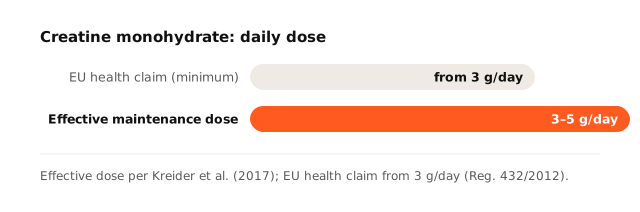
A daily intake of 3 to 5 grams of creatine monohydrate increases intramuscular creatine stores (Kreider et al., 2017). Under EU Regulation 432/2012, creatine carries an approved health claim: a daily intake of at least 3 grams increases physical performance in successive bursts of short-term, high-intensity exercise. A meta-analysis covering 60 randomized controlled trials (n = 1,297) found a statistically significant, small-to-moderate effect on lower-limb maximal strength (Cohen's d 0.24–0.34) (Lanhers et al., 2015). Its effect on hypertrophy is indirect — it comes from training at a higher quality.
Natural sources
Creatine occurs naturally in meat and fish — roughly 3 to 5 grams per kilogram of raw beef or pork. Vegetarians and vegans accordingly take in less creatine through their diet (Antonio et al., 2021).
Track your creatine intake with GymLog AI
GymLog AI reminds you of your daily creatine dose and connects it to your strength and body-weight trends.
Download on the App StoreSources
- Kreider, R. B., et al. (2017). International Society of Sports Nutrition position stand: safety and efficacy of creatine supplementation in exercise, sport, and medicine. JISSN, 14:18. jissn.biomedcentral.com
- Lanhers, C., et al. (2015). Creatine Supplementation and Lower Limb Strength Performance: A Systematic Review and Meta-Analyses. Sports Medicine, 45(9). PubMed
- Antonio, J., et al. (2021). Common questions and misconceptions about creatine supplementation. JISSN, 18:13. jissn.biomedcentral.com
- German Federal Institute for Risk Assessment (BfR) (2006). Assessment of creatine in food supplements. bfr.bund.de
- Commission Regulation (EU) No 432/2012 — list of permitted health claims made on foods. eur-lex.europa.eu