Is creatine effective and safe?
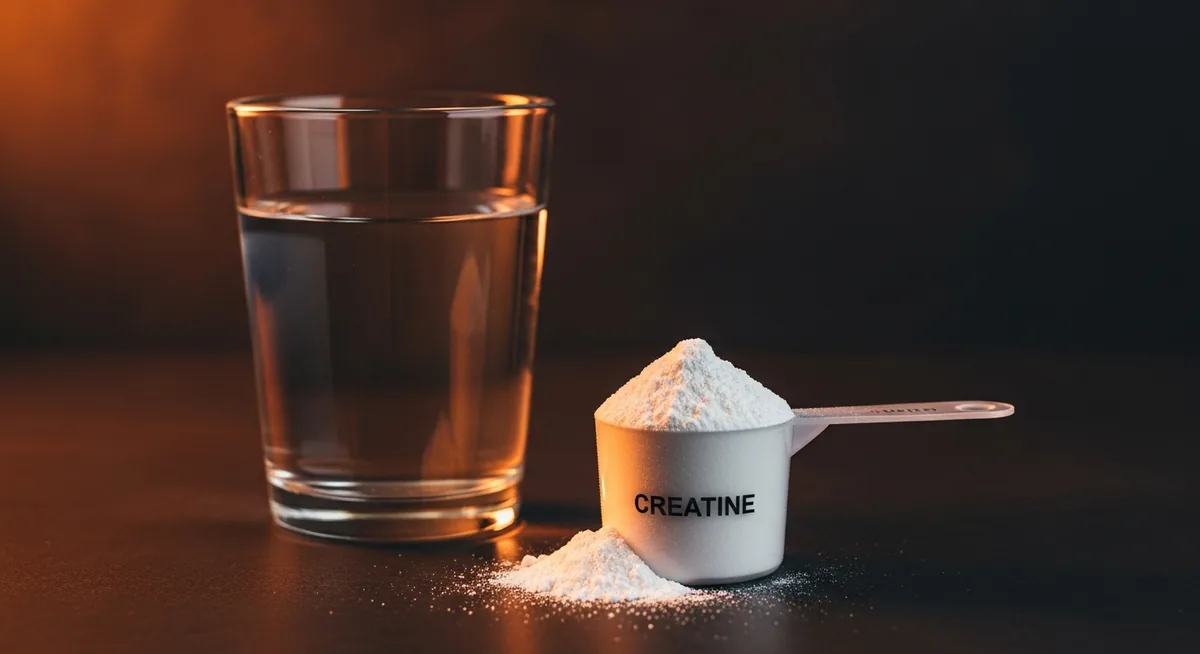
Creatine monohydrate is one of the most thoroughly researched supplements available, according to the ISSN. The recommended daily dose is 3 to 5 grams. Regulatory bodies, including Germany's Federal Institute for Risk Assessment (BfR), consider it safe for healthy adults.
What is creatine?
Creatine is a compound your body produces naturally in the liver, kidneys, and pancreas, and which you also get from food — mainly meat and fish. It is stored in skeletal muscle as phosphocreatine, where it fuels short, intense efforts. Creatine monohydrate is the most widely used and best studied supplement form (Kreider et al., 2017).
Dosage and timing
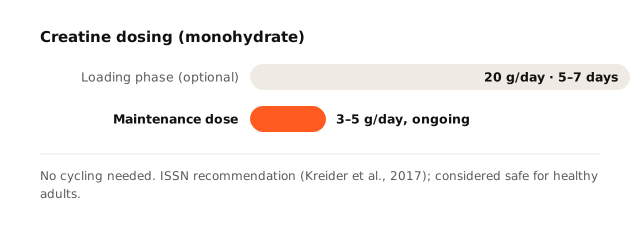
In its position stand, the International Society of Sports Nutrition recommends a maintenance dose of 3 to 5 grams of creatine monohydrate per day (Kreider et al., 2017). An optional loading phase — 20 grams daily for five to seven days — is described in the literature but is not required; a steady daily dose saturates muscle stores just as well, only a few weeks more slowly. Under EU Regulation 432/2012, creatine carries an approved health claim: a daily intake of at least 3 grams increases physical performance during successive bursts of short-term, high-intensity exercise.
Dosing at a glance
| Phase | Dose |
|---|---|
| Loading phase (optional) | 20 g/day · 5–7 days |
| Maintenance dose | 3–5 g/day, ongoing |
| Cycling off | not necessary |
Safety profile
Germany's Federal Institute for Risk Assessment (BfR, 2006) classifies creatine monohydrate as safe for healthy adults at the recommended dose. The weight gain of one to two kilograms often seen in the first weeks is caused by increased water retention inside the muscle cells — not by fat gain.
Track your creatine intake with GymLog AI
GymLog AI reminds you of your daily dose and connects it to your strength and body-weight trends.
Download on the App StoreSources
- Kreider, R. B., et al. (2017). International Society of Sports Nutrition position stand: safety and efficacy of creatine supplementation in exercise, sport, and medicine. JISSN, 14:18. jissn.biomedcentral.com
- Lanhers, C., et al. (2015). Creatine Supplementation and Lower Limb Strength Performance: A Systematic Review and Meta-Analyses. Sports Medicine. PubMed
- Antonio, J., et al. (2021). Common questions and misconceptions about creatine supplementation: what does the scientific evidence really show? JISSN, 18:13. jissn.biomedcentral.com
- German Federal Institute for Risk Assessment (BfR) (2006). Assessment of creatine in food supplements. bfr.bund.de
- Commission Regulation (EU) No 432/2012 — list of permitted health claims made on foods. eur-lex.europa.eu