What should you eat after a workout?
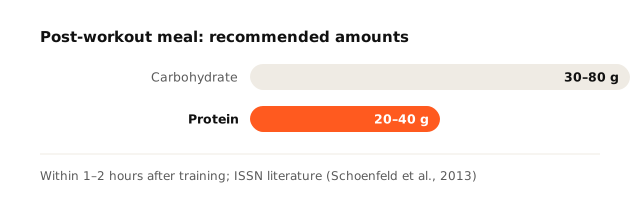
A meal with 20 to 40 grams of protein and 30 to 80 grams of carbohydrate within one to two hours of training is described in the ISSN literature as standard practice for strength athletes. The short "anabolic window" is considered debunked by current research.
What your body needs after training
Damas et al. (2016) describe elevated muscle protein synthesis for 24 to 48 hours after a strength workout. At the same time, intense training partially depletes your muscle glycogen stores. A post-workout meal typically delivers two building blocks: amino acids from protein, and carbohydrates to restock glycogen.
The evidence on timing
The popular idea of a 30- to 60-minute “anabolic window” is considered outdated by current research. In a meta-analysis of 23 studies, Schoenfeld et al. (2013) found no significant benefit to eating protein immediately after training, as long as the daily total was covered. Aragon & Schoenfeld (2013) pragmatically recommend a window of one to two hours after training for the post-workout meal.
How much protein — and what kind
In the studies by Moore et al. (2009), acute muscle protein synthesis plateaued at around 20 to 40 grams of high-quality protein per meal. Sources with a complete amino acid profile and roughly 2.5 to 3 grams of leucine per meal are the standard reference in the ISSN literature: whey protein, low-fat quark, chicken breast, eggs, soy protein. Under the EU’s list of permitted health claims (Regulation 432/2012), protein contributes to the maintenance and growth of muscle mass.
Carbohydrates for recovery
For strength athletes training once per day, moderate amounts of carbohydrate (30 to 80 g) after the workout are enough to refill glycogen stores within 24 hours. For multiple sessions per day, Jentjens & Jeukendrup (2003) recommend a higher intake of up to 1.2 g/kg per hour during the first four hours after exercise to accelerate glycogen resynthesis.
| Example meal | Protein | Carbs |
|---|---|---|
| 150 g chicken breast + 100 g rice | 35 g | 80 g |
| 250 g low-fat quark + banana + honey | 35 g | 55 g |
| Whey shake (40 g) + 60 g oats | 35 g | 40 g |
Keep your protein on track with GymLog AI
GymLog AI plans your post-workout meal and tracks how your protein is spread across the day.
Download on the App StoreSources
- Schoenfeld, B. J., et al. (2013). The effect of protein timing on muscle strength and hypertrophy: a meta-analysis. JISSN, 10:53. jissn.biomedcentral.com
- Aragon, A. A., & Schoenfeld, B. J. (2013). Nutrient timing revisited. JISSN, 10:5.
- Moore, D. R., et al. (2009). Ingested protein dose response of muscle and albumin protein synthesis. Am J Clin Nutr, 89(1). PubMed
- Damas, F., et al. (2016). A review of resistance training-induced changes in skeletal muscle protein synthesis. Sports Medicine, 45(6).
- Jentjens, R., & Jeukendrup, A. E. (2003). Determinants of post-exercise glycogen synthesis. Sports Medicine, 33(2). PubMed
- Jäger, R., et al. (2017). ISSN Position Stand: protein and exercise. JISSN, 14:20. PubMed
- Commission Regulation (EU) No 432/2012 — list of permitted health claims made on foods. eur-lex.europa.eu