What should you eat before a workout?
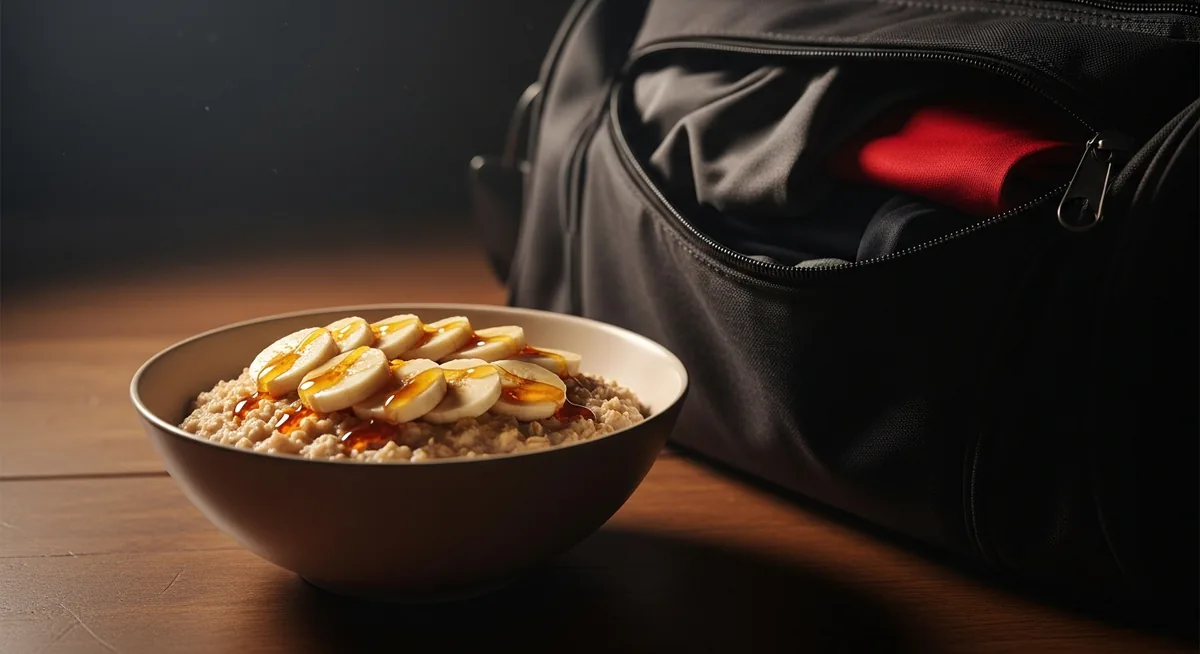
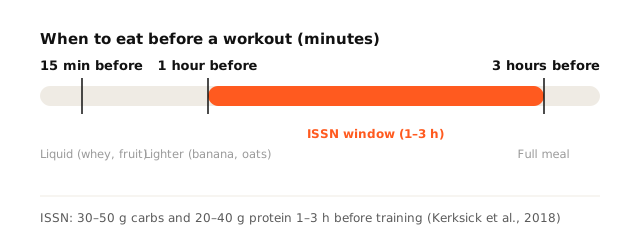
The ISSN recommends a meal with 30 to 50 grams of carbohydrate and 20 to 40 grams of protein roughly one to three hours before training. The exact timing is more flexible than most people think.
Why eat before training at all?
A pre-workout meal tops up your liver glycogen stores, keeps blood sugar stable during the session, and supplies amino acids for muscle protein synthesis. In their review, Aragon & Schoenfeld (2013) show that eating protein before training elevates the amino acid pool for several hours — well beyond the workout itself.
The recommended composition
In the ISSN review, Kerksick et al. (2018) recommend 30 to 50 grams of carbohydrate from slow-digesting sources (oats, whole-grain bread, rice, fruit) and 20 to 40 grams of protein with a complete amino acid profile. Keep the fat content of this meal moderate — a high fat share slows gastric emptying and can cause discomfort if you eat close to training (Jentjens & Jeukendrup, 2003).
Timing — more flexible than you'd think
The classic advice to eat one to two hours before training still holds up. But Schoenfeld et al. (2013) showed that the anabolic window is far longer than once assumed — protein and amino acids remain bioavailable for several hours. If you train fasted in the morning, you won't necessarily lose performance, but you should eat a protein-rich meal within two hours after the session.
| Time before training | Recommendation |
|---|---|
| 3 hours before | Full meal (rice, chicken, vegetables) |
| 1 hour before | Lighter (banana, quark, oats) |
| 15 min before | Liquid (whey, fruit) |
Putting it into practice
A 75 kg (165 lb) person could, for example, eat 80 grams of oats with 250 grams of low-fat quark and a banana about 90 minutes before training. That works out to roughly 60 grams of carbohydrate and 35 grams of protein — enough for a 60- to 90-minute session. Individual tolerance and training time are the deciding factors: some people train better on an empty stomach, others need a solid meal.
Start tracking your calories with GymLog AI
GymLog AI plans your pre-workout meal around your training time and daily targets.
Download on the App StoreSources
- Kerksick, C. M., et al. (2018). ISSN exercise & sports nutrition review update. JISSN, 15:38. jissn.biomedcentral.com
- Aragon, A. A., & Schoenfeld, B. J. (2013). Nutrient timing revisited: is there a post-exercise anabolic window? JISSN, 10:5. jissn.biomedcentral.com
- Schoenfeld, B. J., et al. (2013). The effect of protein timing on muscle strength and hypertrophy: a meta-analysis. JISSN, 10:53.
- Jentjens, R., & Jeukendrup, A. E. (2003). Determinants of post-exercise glycogen synthesis. Sports Medicine, 33(2).
- Grgic, J., et al. (2019). The influence of caffeine supplementation on resistance exercise: A review. Sports Medicine, 49(1). PubMed