What does caffeine do before a workout?
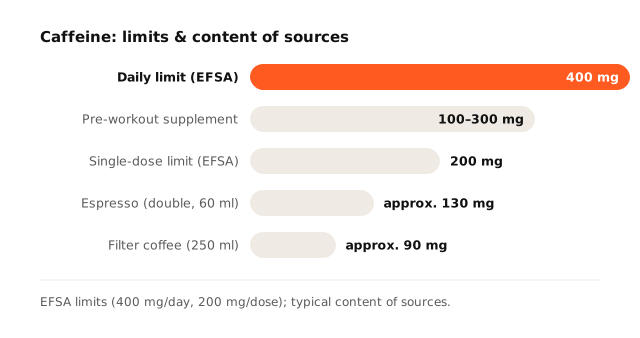
The European Food Safety Authority (EFSA) recommends a maximum daily intake of 400 milligrams of caffeine for healthy adults. Single doses should not exceed 200 milligrams.
What is caffeine?
Caffeine is a naturally occurring alkaloid found in coffee, tea, cocoa, and many dietary supplements. It is absorbed quickly, reaching peak plasma concentration roughly 30 to 60 minutes after intake. How fast you metabolize it varies widely — genetic differences in the CYP1A2 enzyme influence how quickly caffeine is broken down (Pickering & Kiely, 2018).
EFSA safety assessment
The European Food Safety Authority (EFSA, 2015) conducted a comprehensive review of caffeine and issued the following recommendations for healthy adults: no more than 400 milligrams per day in total, and no more than 200 milligrams in a single dose. Pregnant women should stay below 200 milligrams per day. In a randomized study, Drake et al. (2013) showed that a single 400-milligram dose of caffeine measurably reduces sleep quality even when taken six hours before bedtime.
Caffeine content of common sources
| Source | Caffeine content |
|---|---|
| Cup of filter coffee (250 ml) | approx. 90 mg |
| Espresso (double, 60 ml) | approx. 130 mg |
| Pre-workout supplement | 100–300 mg |
Individual differences and caveats
Regular intake leads to tolerance. Possible side effects of excessive consumption include restlessness, racing heart, sleep problems, and gastrointestinal discomfort. Individual tolerance varies considerably (Pickering & Kiely, 2018).
Log your workouts in 5 seconds with GymLog AI
GymLog AI keeps your training log in one place and gives you a clear view of your progress over time.
Download on the App StoreSources
- Grgic, J., et al. (2019). The influence of caffeine supplementation on resistance exercise: A review. Sports Medicine, 49(1). PubMed
- Guest, N. S., et al. (2021). ISSN position stand: caffeine and exercise performance. JISSN, 18:1. jissn.biomedcentral.com
- Southward, K., et al. (2018). The Effect of Acute Caffeine Ingestion on Endurance Performance: A Systematic Review and Meta-Analysis. Sports Medicine, 48(8). PubMed
- Drake, C., et al. (2013). Caffeine effects on sleep taken 0, 3, or 6 hours before going to bed. J Clin Sleep Med, 9(11). PubMed
- EFSA (2015). Scientific Opinion on the safety of caffeine. EFSA Journal, 13(5). efsa.europa.eu