Alcohol in the context of strength training
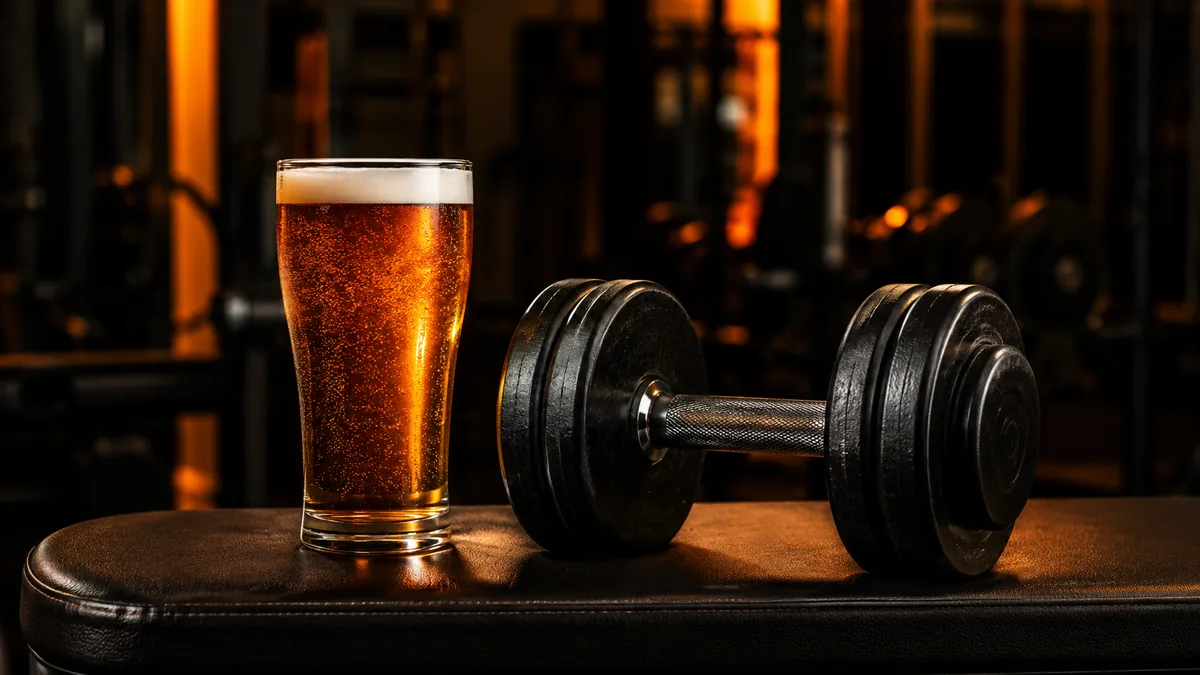
Alcohol delivers 7 kilocalories per gram and counts fully toward your daily calorie balance. Official bodies such as the WHO recommend cutting consumption as far as possible.
The energy density of alcohol
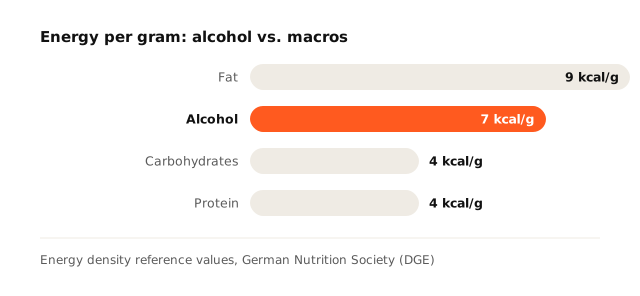
According to the German Nutrition Society (DGE), ethanol provides 7 kilocalories per gram — more than carbohydrates or protein (4 kcal/g each) and only slightly less than fat (9 kcal/g). Calories from alcohol count fully toward your daily balance, which shrinks the room left for other foods.
How your body metabolizes alcohol
The body metabolizes alcohol with priority because it has no way to store ethanol (Siler et al., 1999). While alcohol is being processed, substrate use shifts: fat oxidation is temporarily reduced while the liver breaks ethanol down into acetate and ultimately into CO₂ and water. This describes a purely metabolic process, not a product-related effect claim.
Intake guidelines
The German Centre for Addiction Issues (DHS) defines low-risk consumption as no more than 12 grams of pure alcohol per day for women and 24 grams per day for men — roughly 0.3 or 0.6 liters (about 10 or 20 fl oz) of beer at 5 percent alcohol. On top of that, at least two alcohol-free days per week are recommended. In its 2023 statement, the World Health Organization notes that, from a health perspective, no level of alcohol consumption is safe.
| Drink | Alcohol | Calories |
|---|---|---|
| 0.5 l (17 fl oz) beer (5%) | 20 g | approx. 210 kcal |
| 0.2 l (6.8 fl oz) white wine (12%) | 19 g | approx. 150 kcal |
| 4 cl (1.4 fl oz) spirits (40%) | 13 g | approx. 95 kcal |
Plan your calorie balance with GymLog AI
GymLog AI logs every drink within your calorie balance — including alcohol-free alternatives.
Download on the App StoreSources
- German Nutrition Society (DGE). Energy density of alcohol — reference values. dge.de
- German Centre for Addiction Issues (DHS). Alcohol — low-risk consumption. dhs.de
- Siler, S. Q., et al. (1999). De novo lipogenesis, lipid kinetics, and whole-body lipid balances in humans after acute alcohol consumption. Am J Clin Nutr. PubMed
- World Health Organization (2023). No level of alcohol consumption is safe for our health. who.int