What is a calorie surplus?
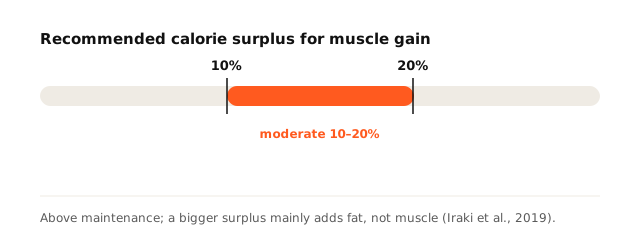
A calorie surplus exists when the energy you take in exceeds your daily energy expenditure. For controlled muscle gain, sports science position papers recommend a moderate surplus of 10 to 20 percent above maintenance.
Definition and calculation
A calorie surplus is the difference between the energy you take in through food and your total daily energy expenditure. That expenditure is made up of your basal metabolic rate, the energy burned through physical activity, and the thermic effect of food. When you take in more energy than you burn, your body stores the excess — partly as muscle mass if there's a training stimulus, partly as body fat.
How big should it be for muscle gain?
For trained athletes in a building phase, a moderate surplus of roughly 10 to 20 percent above maintenance is recommended — high enough to support muscle protein synthesis, low enough to limit fat gain (Iraki et al., 2019). Untrained beginners can sometimes build muscle on a smaller surplus or even a slight deficit (“recomposition”).
Why a surplus helps
A positive energy balance supports an anabolic environment. In a calorie deficit, muscle protein synthesis declines while protein breakdown can increase (Slater et al., 2019). A moderate surplus shifts the balance toward muscle gain — provided your training and protein intake are in order (Jäger et al., 2017).
Start tracking your calories with GymLog AI
GymLog AI estimates your maintenance calories and shows whether you're truly in a surplus or a deficit.
Download on the App StoreSources
- Iraki, J., Fitschen, P., Espinar, S., Helms, E. (2019). Nutrition Recommendations for Bodybuilders in the Off-Season: A Narrative Review. Sports, 7(7). PubMed
- Slater, G. J., Dieter, B. P., Marsh, D. J., Helms, E. R., Shaw, G., Iraki, J. (2019). Is an Energy Surplus Required to Maximize Skeletal Muscle Hypertrophy Associated With Resistance Training. Frontiers in Nutrition, 6. PubMed
- Jäger, R., et al. (2017). International Society of Sports Nutrition Position Stand: protein and exercise. Journal of the International Society of Sports Nutrition, 14. PubMed