What is the PAL value?

The PAL value (Physical Activity Level) describes the ratio of total energy expenditure to basal metabolic rate. In healthy adults it ranges from 1.2 (entirely sedentary) to 1.9 (heavy physical labor).
Definition
The PAL value serves as the international reference for calculating daily energy requirements (FAO/WHO/UNU, 2004). Multiply it by your basal metabolic rate and you get your total daily energy expenditure.
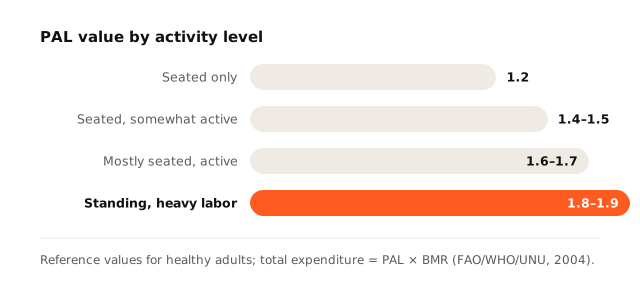
| PAL | Activity level |
|---|---|
| 1.2 | Seated only, no leisure activity |
| 1.4–1.5 | Seated, occasionally standing/walking |
| 1.6–1.7 | Mostly seated, regularly active |
| 1.8–1.9 | Standing/walking, heavy physical labor |
Adding exercise on top
The German Nutrition Society (DGE) recommends factoring in sports and exercise separately. Each 30 to 60 minutes of intense activity raises daily expenditure by roughly 0.3 PAL units (DGE, reference values). Alternatively, you can simply add the energy cost of each workout on top of your baseline.
Start tracking your calories with GymLog AI
GymLog AI picks your PAL value automatically based on your daily routine and adjusts it as your weight changes.
Download on the App Store