What are the best plant-based protein sources?
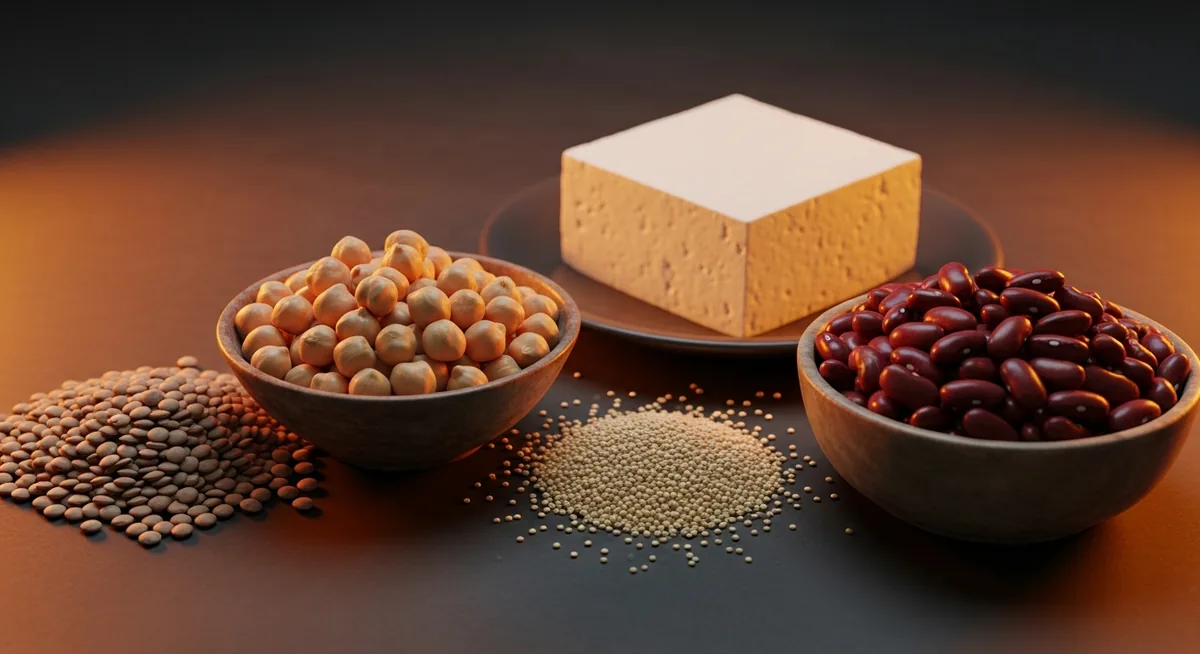
Soy, legumes, and seitan deliver the most protein per serving. For muscle growth, the research focuses primarily on total daily intake and the amino acid profile.
Sources with the highest protein density
The most efficient plant-based protein sources include soy products (tofu, tempeh, soy flakes), legumes (lentils, chickpeas, beans), and seitan. In their review, Messina et al. (2018) describe soy protein as qualitatively comparable to animal proteins, since its amino acid profile contains all essential amino acids in sufficient amounts.
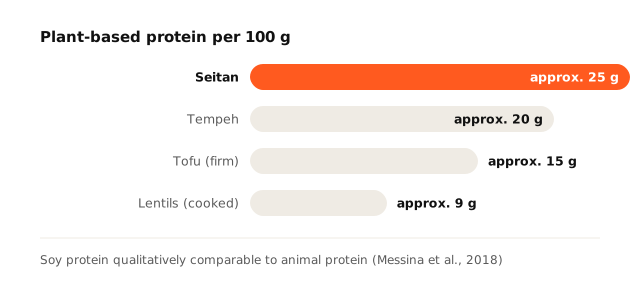
| Food | Protein per 100 g |
|---|---|
| Seitan | approx. 25 g |
| Tempeh | approx. 20 g |
| Tofu (firm) | approx. 15 g |
| Lentils (cooked) | approx. 9 g |
Leucine as the limiting factor
Leucine is frequently singled out in the sports nutrition literature as a key amino acid for muscle growth. On average, plant sources contain less leucine than animal sources. Berrazaga et al. (2019) therefore recommend that vegan strength athletes either raise their total protein intake by around 20 to 30 percent or deliberately combine different sources (e.g. grains + legumes).
Keep your protein on track with GymLog AI
GymLog AI recognizes plant-based protein sources from a photo and calculates your daily balance automatically.
Download on the App StoreSources
- Messina, M., et al. (2018). Evaluation of the potential of soy protein to support muscle protein accretion. Int J Sport Nutr Exerc Metab, 28(6). PubMed
- Berrazaga, I., et al. (2019). The role of the anabolic properties of plant- versus animal-based protein sources in supporting muscle mass maintenance. Nutrients, 11(8). PubMed
- German Nutrition Society (DGE) (2020). Vegan diet — DGE position. dge.de