How many calories are in a smoothie?
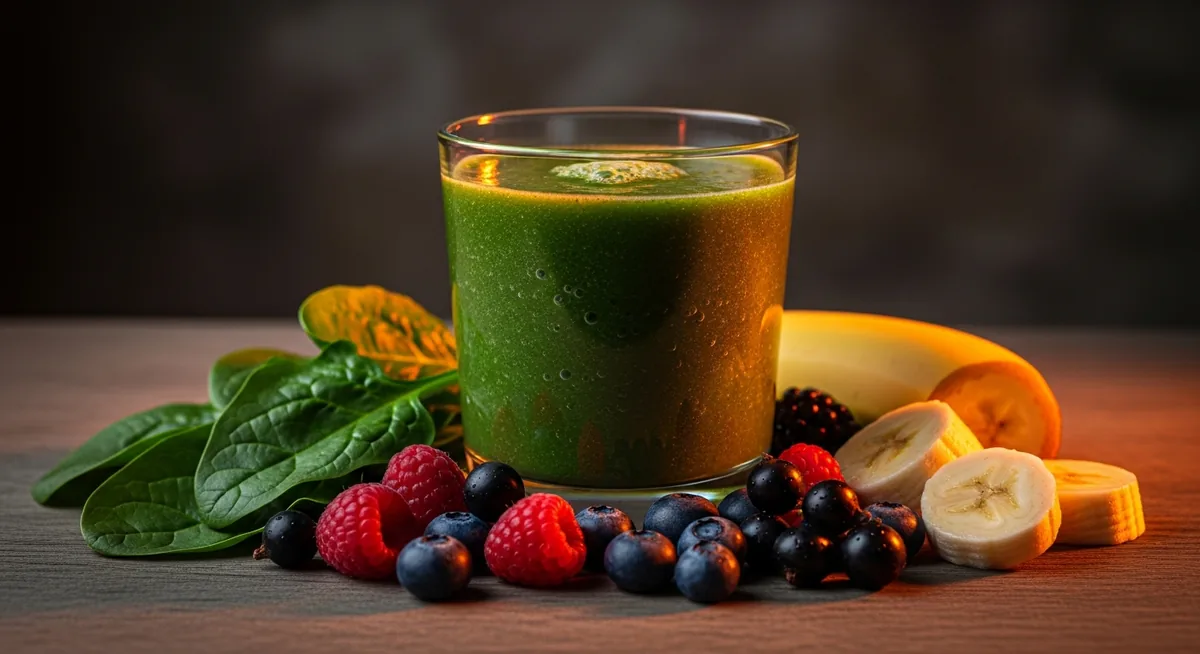
A classic smoothie made with banana, berries, and milk lands at around 320 calories per 400-ml (13.5 fl oz) glass. Add oats, nut butter, or protein powder and a smoothie quickly hits 500 to 700 calories — more than a full meal.
Sample recipe with a calorie breakdown
Homemade smoothies pack concentrated calories into liquid form. The nutrition data from the Bundeslebensmittelschlüssel (BLS) — Germany’s national food composition database — and the USDA lets you simply add up the ingredients. A medium blender smoothie with banana, berries, and milk makes a typical reference example.
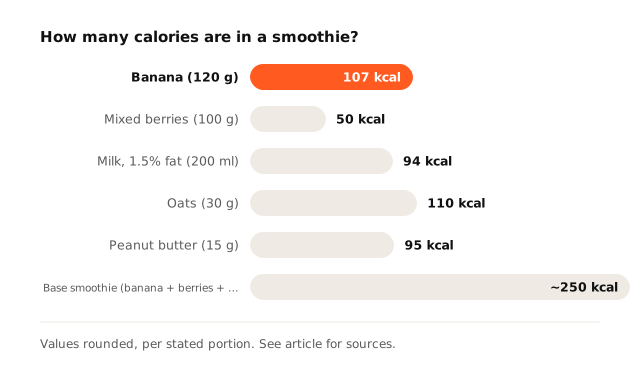
| Ingredient (amount) | Calories |
|---|---|
| Banana (120 g) | 107 kcal |
| Mixed berries (100 g) | 50 kcal |
| Milk, 1.5% fat (200 ml) | 94 kcal |
| Oats (30 g) | 110 kcal |
| Peanut butter (15 g) | 95 kcal |
| Base smoothie (banana + berries + milk) | ~250 kcal |
| With oats + nut butter | ~455 kcal |
Protein smoothies for strength training
Add a scoop of whey protein (25 g of powder, 100 kcal, 22 g of protein) and the base smoothie becomes a protein-rich meal with around 350 kcal and 28 g of protein. That makes a smoothie a smart post-workout option — especially when your appetite is low right after training.
Green smoothies — really lighter?
Green smoothies built on leafy greens (spinach, kale), apple, lemon, and water sit considerably lower on the calorie scale — typically 150 to 200 kcal per 400 ml. Unlike green juice, blending keeps the fiber intact, which softens the blood sugar spike.
Store-bought smoothies compared
Commercial supermarket smoothies typically contain 45 to 55 kcal per 100 ml and 10 to 12 g of sugar — similar to fruit juice. According to a 2020 analysis by the Verbraucherzentrale, Germany’s consumer protection organization, 250-ml bottles average 130 calories and 25 g of sugar. That is noticeably less than homemade versions made with milk and oats.
Start tracking calories with GymLog AI
GymLog AI adds up your smoothie ingredients automatically — with realistic gram amounts for bananas, berries, and oats.
Download on the App StoreSources
- Bundeslebensmittelschlüssel (BLS) — Germany’s national food composition database. Max Rubner Institute. blsdb.de
- USDA FoodData Central. Fruits and milk, raw and prepared. fdc.nal.usda.gov
- Mourao, D. M., et al. (2007). Effects of food form on appetite and energy intake in lean and obese young adults. Int J Obes. PubMed
- Verbraucherzentrale (German consumer protection organization). Smoothies: fruity treat or calorie bomb? verbraucherzentrale.de