How many calories are in nuts?
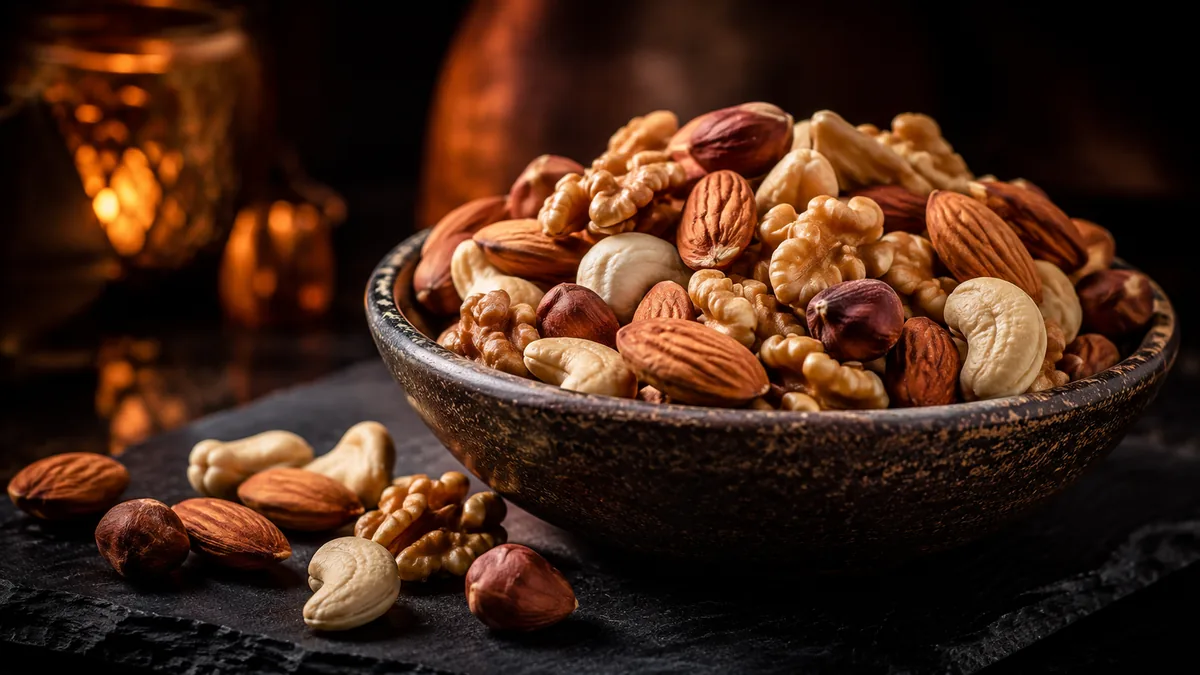
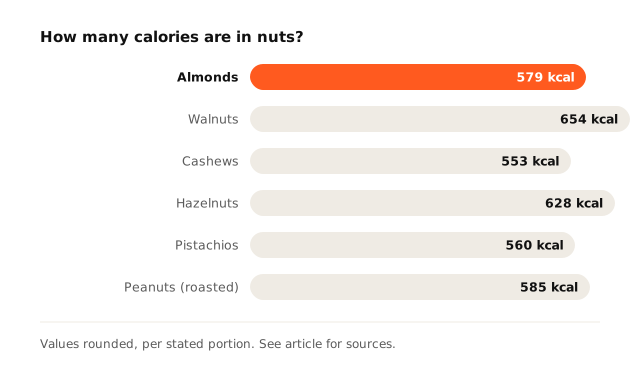
According to the USDA, 100 grams (3.5 oz) of nuts deliver between 553 and 718 calories, depending on the variety. A handful of around 30 grams (1 oz) works out to 170 to 215 calories — making nuts one of the most energy-dense snack categories there is.
Your own meal? Snap a photo – the AI estimates calories and macros in seconds. 3 free scans a day, no sign-up.
Keep scanning in the GymLog AI app – with daily targets and history.
Get the app for free →Nut calories compared
| Variety (100 g) | Calories |
|---|---|
| Almonds | 579 kcal |
| Walnuts | 654 kcal |
| Cashews | 553 kcal |
| Hazelnuts | 628 kcal |
| Pistachios | 560 kcal |
| Peanuts (roasted) | 585 kcal |
| Macadamias | 718 kcal |
Why nuts are so calorie-dense
Nuts are 45 to 75 percent fat. At around 9 calories per gram, fat is the most energy-dense macronutrient — twice as dense as carbohydrate or protein. Even the "lightest" nuts like cashews and pistachios still sit well above classic snacks such as fruit or yogurt.
Roasted, salted, or sugar-coated
Roasted and salted nuts contain barely more calories than raw ones — the difference is 1 to 3 percent. Where it really matters is with sugared or honey-glazed varieties: 100 grams of candied almonds (the German fairground classic "gebrannte Mandeln") deliver around 480 calories from the almonds plus another 150 calories from the sugar crust. Trail mix with raisins and cranberries adds roughly 50 calories per 100 grams over pure nut mixes, thanks to the fruit sugar.
Nuts and muscle growth
Despite their calorie density, nuts are a relevant protein and mineral source for strength athletes. Almonds provide around 21 grams of protein per 100 grams, peanuts around 26 grams. In its position stand on energy intake, the ISSN names nuts as an efficient way to hit your calorie target during bulking phases without having to eat huge volumes of food.
Portion size in practice
The German Nutrition Society (DGE) recommends a daily portion of 25 to 30 grams of nuts — about a handful. At that amount, nuts feature in the dietary patterns most often studied, including the PREDIMED trial (Estruch et al., 2018). Larger portions of 60 to 100 grams can quickly blow past the daily calorie budget of many diets by 20 to 40 percent.
Start tracking calories with GymLog AI
GymLog AI identifies nut mixes and individual varieties from a photo and logs the portion against your daily budget in seconds.
Download on the App StoreGet it on Google PlaySources
- USDA FoodData Central. Nuts and seeds. fdc.nal.usda.gov
- Max Rubner Institute. Bundeslebensmittelschlüssel (BLS), version 3.02 — Germany’s national food composition database. blsdb.de
- Nishi, S. K., et al. (2021). Effect of almond consumption on metabolic risk factors. Nutrients. PubMed
- Estruch, R., et al. (2018). Primary Prevention of Cardiovascular Disease with a Mediterranean Diet (PREDIMED). NEJM. PubMed
- German Nutrition Society (DGE). Wholesome eating and drinking — nuts. dge.de