How many calories are in sushi?
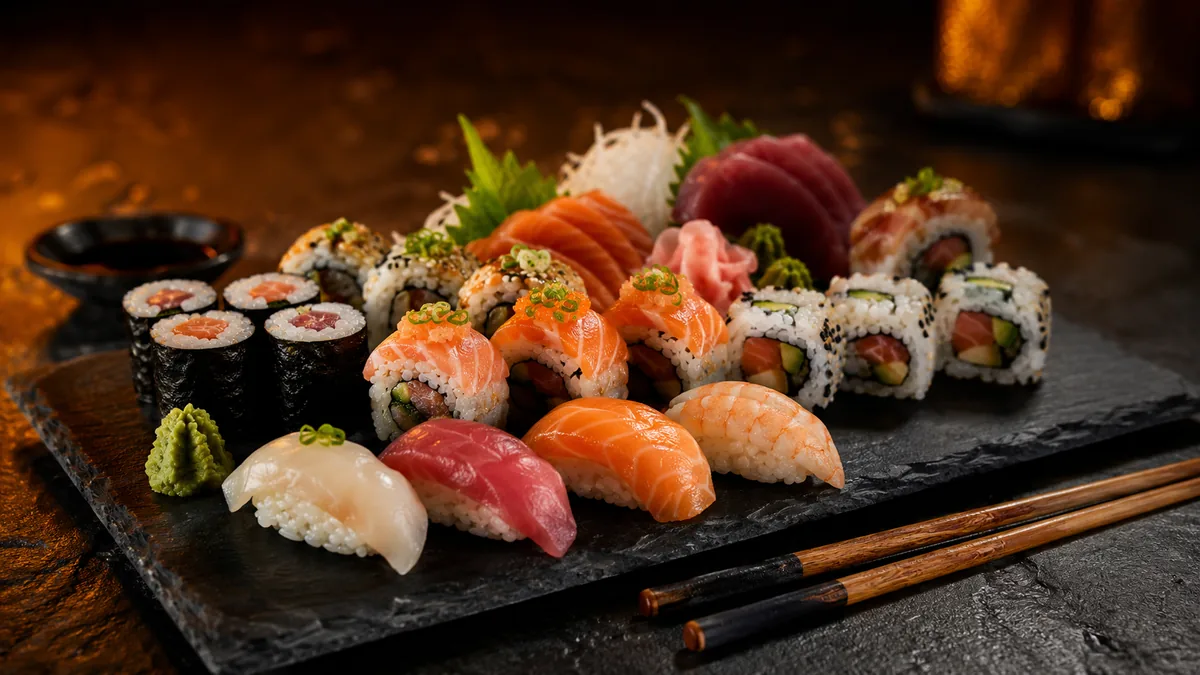
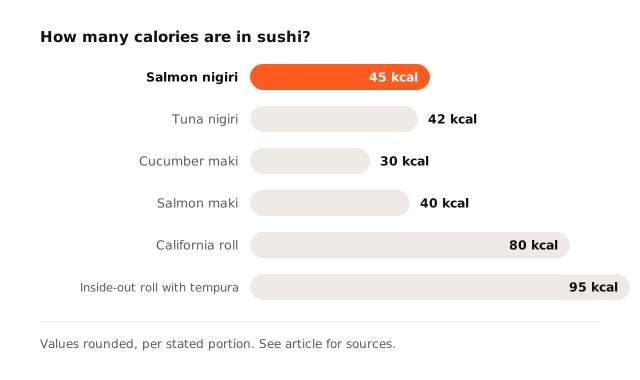
A classic salmon nigiri delivers around 45 calories, according to the USDA. A single maki piece runs 35 to 50 calories, a California roll 70 to 90 calories per piece. A standard platter of 12 to 16 pieces quickly reaches 500 to 800 calories.
Calories per sushi piece
| Sushi type (per piece) | Calories |
|---|---|
| Salmon nigiri | 45 kcal |
| Tuna nigiri | 42 kcal |
| Cucumber maki | 30 kcal |
| Salmon maki | 40 kcal |
| California roll | 80 kcal |
| Inside-out roll with tempura | 95 kcal |
What drives the calories in sushi
The main calorie carrier in sushi is the sushi rice. 100 grams (3.5 oz) of cooked sushi rice deliver around 150 calories, because it is seasoned with rice vinegar, sugar, and salt before serving. The fish itself — salmon, tuna, shrimp — contributes only 15 to 25 calories per piece. That is why roughly 70 percent of the calories in a handful of nigiri come from the rice.
Tempura, mayo, and sauces
Inside-out rolls with tempura or a mayonnaise filling double the calories compared to plain maki. A "crunchy roll" or "dragon roll" with a deep-fried filling and aioli runs 100 to 130 calories per piece. Soy sauce adds only about 4 calories per teaspoon (5 ml), but classic sweet chili or teriyaki sauces deliver 15 to 25 calories per tablespoon.
Sushi and muscle growth
A platter of 16 mixed sushi pieces provides around 25 to 35 grams of protein, depending on the share of fish. For a post-workout main meal, that usually falls short at higher body weights. In its position stand, the ISSN recommends 20 to 40 grams of high-quality protein per post-workout meal. If sushi is your training-day meal, it makes sense to pair the platter with edamame (18 g of protein per 150 g in the pod) or extra sashimi.
Start tracking calories with GymLog AI
GymLog AI recognizes sushi platters in a photo, tells nigiri, maki, and rolls apart, and logs them against your daily budget automatically.
Download on the App StoreSources
- USDA FoodData Central. Sushi, various types. fdc.nal.usda.gov
- Max Rubner Institute. Bundeslebensmittelschlüssel (BLS), version 3.02 — Germany’s national food composition database. blsdb.de
- Jäger, R., et al. (2017). International Society of Sports Nutrition Position Stand: protein and exercise. JISSN. PubMed
- German Federal Center for Nutrition (BZfE). Sushi — product guide. bzfe.de