How many calories are in tuna?
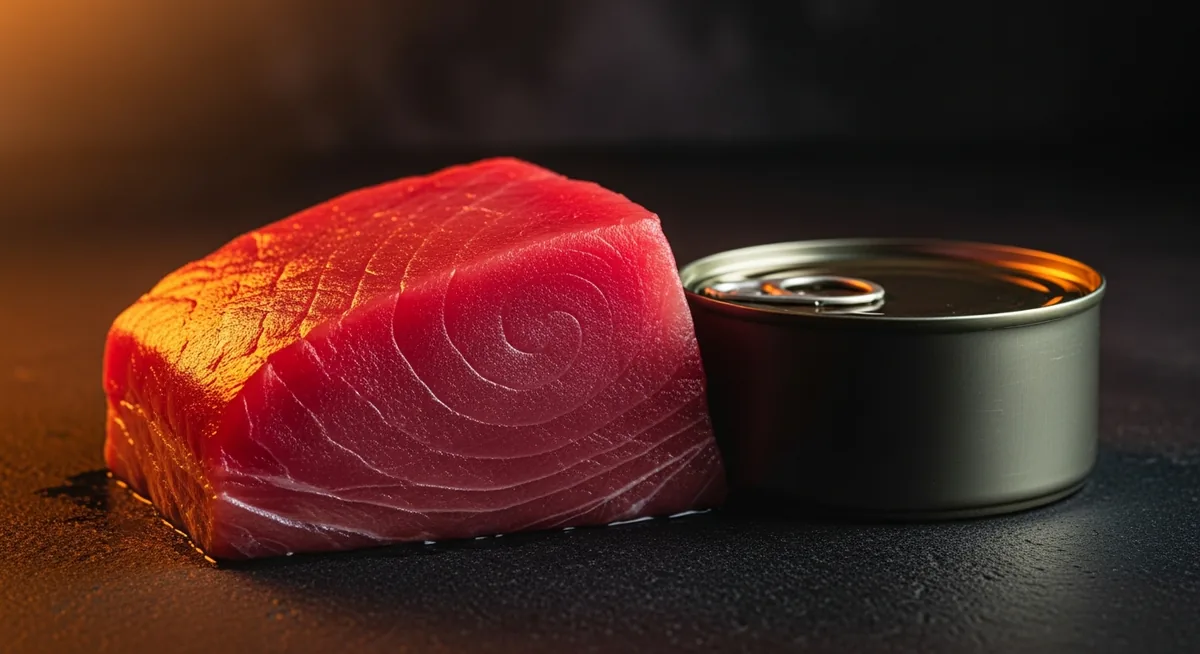
According to the German BLS food database, canned tuna in water delivers around 108 kcal per 100 g (3.5 oz), with 24 g of protein and under 1 g of fat. Packed in oil, the calorie count climbs to roughly 190 kcal/100 g. Fresh tuna sits at around 144 kcal/100 g.
Tuna varieties
Tuna ranks among the most protein-dense foods there are. Canned in water (or its own juices), the fat content is minimal; canned in oil, tuna picks up a significant calorie load from the oil. Fresh or frozen tuna falls into a similar calorie range across species, from albacore (white tuna) to yellowfin.
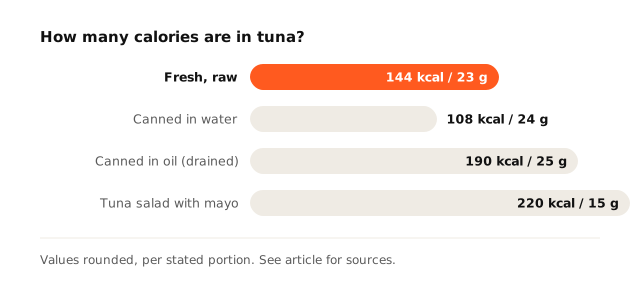
| Variety | Calories / protein per 100 g |
|---|---|
| Fresh, raw | 144 kcal / 23 g |
| Canned in water | 108 kcal / 24 g |
| Canned in oil (drained) | 190 kcal / 25 g |
| Tuna salad with mayo | 220 kcal / 15 g |
Why tuna is so protein-dense
At 24 g of protein per 100 g, tuna is one of the richest natural animal protein sources around — comparable to chicken breast, but with considerably more omega-3 when fresh. A can yielding 130 g of drained fish delivers roughly 31 g of protein for just 140 kcal, which makes tuna especially effective in a calorie deficit.
Mercury exposure
As a predator at the top of the marine food chain, tuna accumulates methylmercury. Germany’s Federal Institute for Risk Assessment (BfR) advises pregnant and breastfeeding women as well as young children to limit their intake. For healthy adults, one to two servings of tuna per week are considered safe. According to the European Food Safety Authority (EFSA), canned tuna from smaller species like skipjack contains markedly less mercury than larger species such as yellowfin or bluefin.
Tuna salad: a calorie trap
Classic tuna salad made with mayonnaise lands at around 220 kcal per 100 g despite its tuna base — roughly double the figure for tuna in water. The culprit is the mayonnaise, which packs around 700 kcal/100 g. Yogurt-based versions bring the count down to under 150 kcal/100 g.
Start tracking calories with GymLog AI
GymLog AI tells tuna in water from tuna in oil and counts the oil proportionally toward your calories.
Download on the App StoreSources
- Max Rubner Institute. Bundeslebensmittelschlüssel (BLS) — Germany’s national food composition database. blsdb.de
- USDA FoodData Central. Fish, tuna, light, canned in water / oil, drained solids. fdc.nal.usda.gov
- German Federal Institute for Risk Assessment (BfR). Methylmercury: fish consumption advice. bfr.bund.de
- EFSA. Scientific Opinion on the risks to public health related to the presence of mercury and methylmercury in food. efsa.europa.eu