How many calories are in salmon?
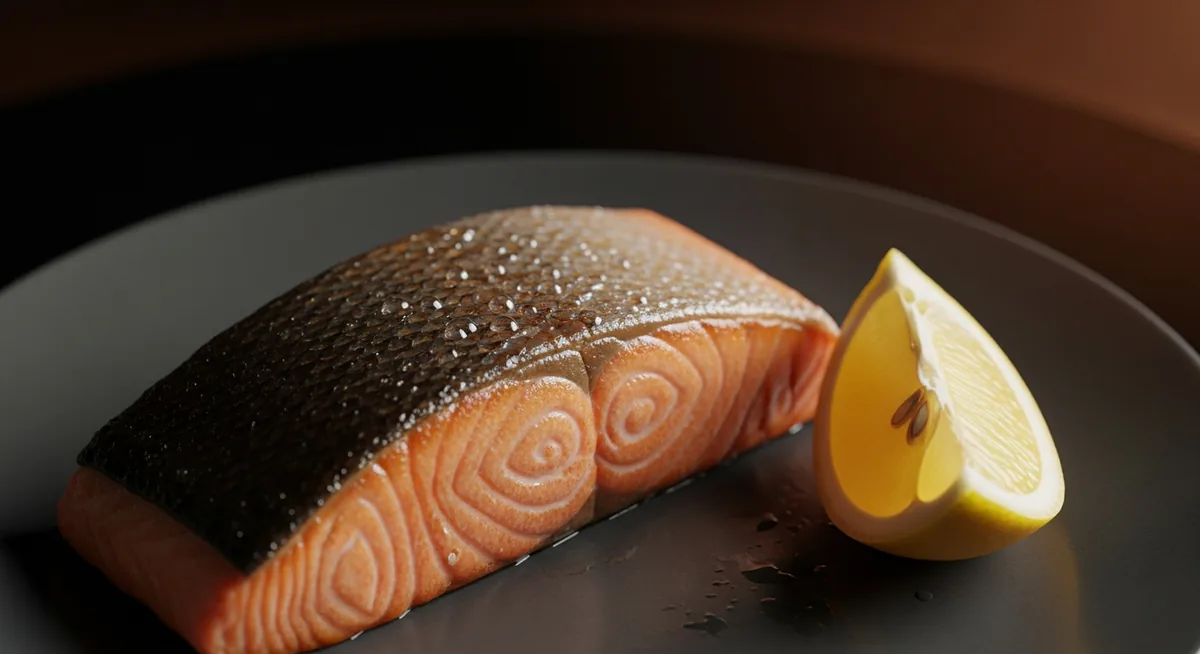
According to the German BLS food database, raw farmed salmon delivers around 208 kcal per 100 g (3.5 oz), with 20 g of protein and 13 g of fat. Wild salmon is considerably leaner at roughly 145 kcal per 100 g. Smoked salmon comes in at about 180 kcal/100 g.
Salmon varieties at a glance
Salmon is a classic oily fish, providing high-quality protein along with meaningful amounts of omega-3 fatty acids. Calorie content differs substantially between wild and farmed salmon, and again depending on how it’s prepared. The BLS (Germany’s national food composition database) and USDA FoodData Central list different values depending on origin.
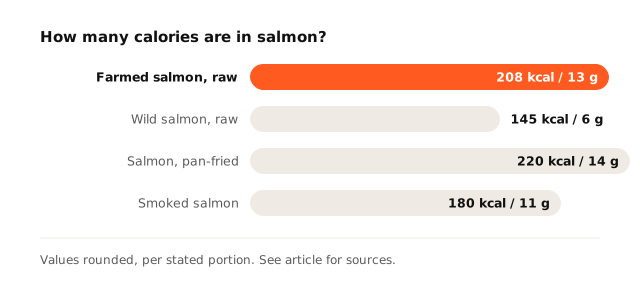
| Variety | Calories / fat per 100 g |
|---|---|
| Farmed salmon, raw | 208 kcal / 13 g |
| Wild salmon, raw | 145 kcal / 6 g |
| Salmon, pan-fried | 220 kcal / 14 g |
| Smoked salmon | 180 kcal / 11 g |
Omega-3 content and health effects
The DGE recommends one to two fish meals per week, at least one of them featuring oily sea fish such as salmon, herring, or mackerel. A 150 g (5.3 oz) serving of salmon covers a full week’s requirement of the long-chain omega-3 fatty acids EPA and DHA. The European Food Safety Authority (EFSA) classifies a daily intake of 250 mg EPA+DHA as beneficial for cardiovascular health.
Nutrition details
Beyond protein and omega-3, salmon supplies notable amounts of vitamin D (around 16 µg per 100 g of farmed salmon), vitamin B12, and selenium. According to the DGE, salmon is one of the few reliable natural dietary sources of vitamin D.
Contaminant levels
Germany’s Federal Institute for Risk Assessment (BfR) considers salmon consumption at typical amounts to be safe. Farmed salmon is routinely tested for dioxins and PCBs; according to the BfR’s 2022 report, contamination levels stayed below the legal limits. The BfR nevertheless advises pregnant women to limit intake to two servings per week.
Start tracking calories with GymLog AI
GymLog AI tells farmed from wild salmon and factors omega-3 into your fat intake — no spreadsheets required.
Download on the App StoreSources
- Max Rubner Institute. Bundeslebensmittelschlüssel (BLS) — Germany’s national food composition database. blsdb.de
- USDA FoodData Central. Fish, salmon, Atlantic, farmed, raw / wild, raw. fdc.nal.usda.gov
- German Nutrition Society (DGE). Fat and essential fatty acids — reference values. dge.de
- German Federal Institute for Risk Assessment (BfR). Fish — nutritional significance and risk assessment. bfr.bund.de