The most important compound exercises in strength training
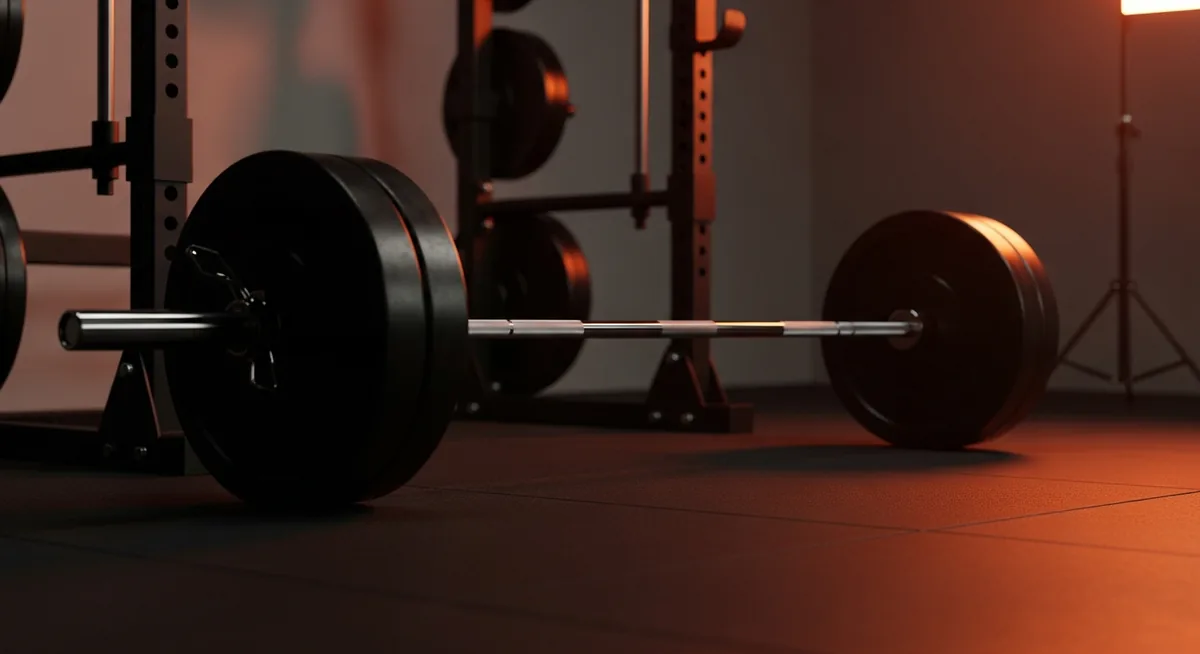
The three core compound exercises in strength training are the squat, deadlift, and bench press. They form the foundation of powerlifting and, according to the NSCA textbook, cover the majority of your muscle groups with just a handful of multi-joint movements. Pull-ups and the overhead press are the most common additions.
Why compound exercises are so effective
Compound exercises — also called multi-joint exercises or compound lifts — move several joints and muscle groups at the same time. According to the NSCA's standard reference, "Essentials of Strength Training and Conditioning," they are central for three reasons: they let you move heavy loads, they work the largest amount of muscle mass per unit of time, and they train the coordinated interplay between muscle groups. A study by Paoli et al. (2017) found that a program built purely on compound lifts produced similar hypertrophy over 12 weeks as a program combining compound and isolation exercises.
The five core compound lifts
| Exercise | Primary muscle groups |
|---|---|
| Squat | Quadriceps, glutes, spinal erectors |
| Deadlift | Spinal erectors, glutes, hamstrings |
| Bench press | Chest, triceps, front delts |
| Pull-up | Lats, biceps, rear delts |
| Overhead press | Shoulders, triceps, upper traps |
Squat, deadlift, bench press — the "Big Three"
The three classic powerlifting disciplines are described in the textbooks of Zatsiorsky and Kraemer as the core of any strength-training program. In EMG measurements by Clark et al. (2012), squats showed pronounced activation of the quadriceps. According to measurements by Escamilla et al. (2002), the deadlift recruits the entire posterior chain — spinal erectors, glutes, and hamstrings — in a single movement. And per Saeterbakken et al. (2017), the bench press is among the most thoroughly studied exercises for the chest in terms of maximal strength and muscle activation.
The technical challenge
Compound exercises demand more of your movement execution than machine exercises do. A systematic review by Aasa et al. (2017) identified poor knee position in the squat and a rounded spine in the deadlift as the most common errors among beginners. The NSCA guidelines recommend deliberately using light loads for the first few months and prioritizing technique over progression. If you have access to a strength coach or physical therapist, this is the phase where it pays off most.
Compound exercises for beginners
The ACSM recommends that beginners follow a full-body program with three sessions per week, built around two to three compound lifts per session and supplemented by two to three isolation exercises for weak points. This approach underpins the established beginner programs and is supported by current research on training frequency (Schoenfeld et al., 2016).
Log your workouts in 5 seconds with GymLog AI
GymLog AI recognizes your compound lifts automatically, charts your 1RM over time, and suggests your next progression.
Download on the App StoreSources
- Haff, G. G., Triplett, N. T. (Eds.) (2016). Essentials of Strength Training and Conditioning. NSCA. nsca.com
- Paoli, A., et al. (2017). Resistance Training with Single vs. Multi-Joint Exercises at Equal Total Load Volume: Effects on Body Composition. Frontiers in Physiology. PubMed
- Clark, D. R., et al. (2012). Muscle activation in the loaded free barbell squat. JSCR. PubMed
- Escamilla, R. F., et al. (2002). An electromyographic analysis of sumo and conventional style deadlifts. Med Sci Sports Exerc. PubMed
- Saeterbakken, A. H., et al. (2017). The effects of bench press variations in competitive athletes on muscle activity and performance. J Hum Kinet. PubMed
- Aasa, U., et al. (2017). Injuries among weightlifters and powerlifters: a systematic review. Br J Sports Med. PubMed
- American College of Sports Medicine. ACSM Position Stand: Progression Models in Resistance Training. acsm.org