Free weights or machines — which is better?
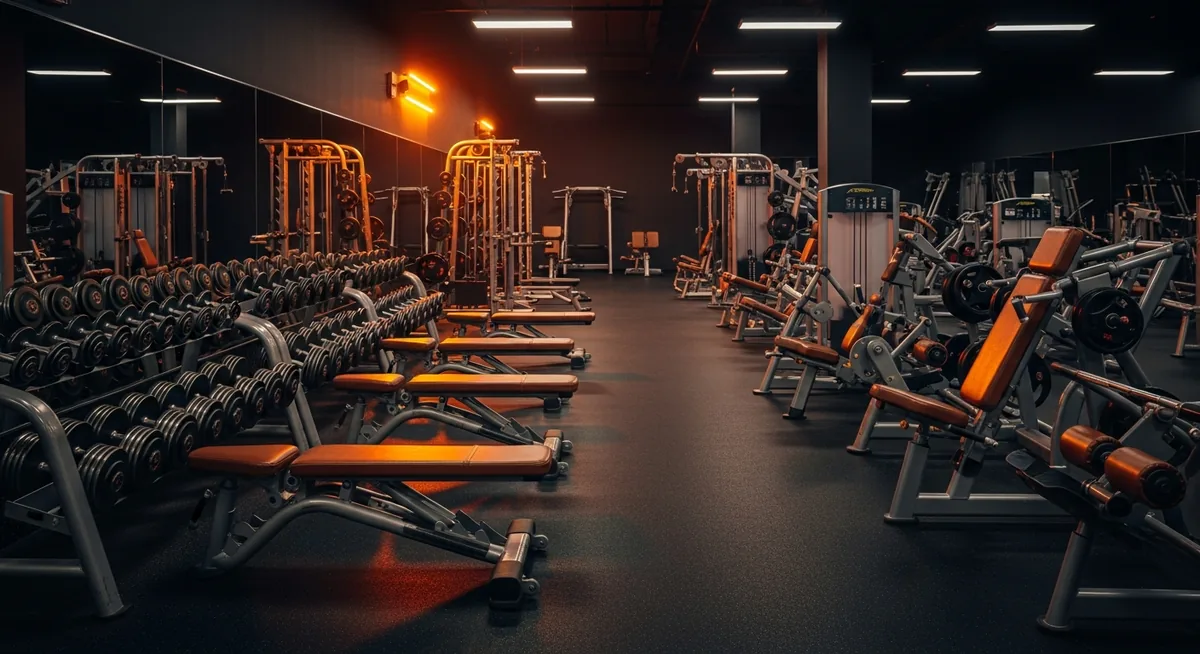
When training volume is matched, free weights and machines produce comparable gains in muscle mass and strength. The real differences lie in functional carryover, coordination demands, and individual fit.
The direct evidence
In a randomized trial, Schwanbeck et al. (2020) compared eight weeks of machine training with eight weeks of free-weight training. With volume matched, both groups showed comparable gains in hypertrophy. Maximal strength also increased in both groups — specific to whichever exercise style the group had trained. Haugen et al. (2023) documented similar results in a meta-analysis of 13 studies.
Differences in specificity
Train on machines, and you get strong on machines. Train with free weights, and you get strong in free-weight lifts. The principle of specificity has been established in exercise science for decades (American College of Sports Medicine, 2009). For carryover to sport or everyday functional demands, free-weight training is usually the better choice.
Coordination and safety
Machines provide a guided movement path and reduce injury risk for beginners or anyone training without a spotter. Free weights recruit more stabilizing muscle but demand more technically. For experienced lifters, combining both modalities remains the most efficient solution, according to Fisher et al. (2014).
Volume and consistency under fatigue
Machines let you grind through high set counts with consistent technique, especially when fatigue sets in late in a session. Free weights offer flexible variation (grip and bar positions, tempo, unilateral options) plus functional stability demands. In practice, the two complement each other.
| Aspect | Free weights | Machines |
|---|---|---|
| Hypertrophy (volume matched) | Equal | Equal |
| Coordination & stability | Higher | Lower |
| Technical barrier to entry | Higher | Lower |
| Injury risk under fatigue | Higher | Lower |
Log your workouts in 5 seconds with GymLog AI
GymLog AI recognizes both exercise styles and compares your progression exercise by exercise.
Download on the App StoreSources
- Schwanbeck, S. R., et al. (2020). The effects of training with free weights versus machines on muscle mass, strength, free testosterone, and free cortisol levels. J Strength Cond Res, 34(7). PubMed
- Haugen, M. E., et al. (2023). Effects of free weight and machine-based strength training on strength and physical function. BMC Sports Sci Med Rehabil, 15. PubMed
- Fisher, J., et al. (2014). A comparison of machine versus free-weight resistance training modalities. J Strength Cond Res, 28(1). PubMed
- American College of Sports Medicine (2009). Position Stand: Progression Models in Resistance Training. Med Sci Sports Exerc, 41(3). PubMed