Full body or split — which is better?

At equal weekly volume, full-body and split training produce comparable results. What matters is a frequency of at least two sessions per muscle group per week.
Head-to-head in controlled studies
In an eight-week randomized study, Schoenfeld et al. (2015) compared full-body training three times per week against a split that hit each muscle group once weekly. With total volume held identical, the full-body group trended toward greater hypertrophy — an advantage the authors attributed to the higher training frequency.
What this means in practice
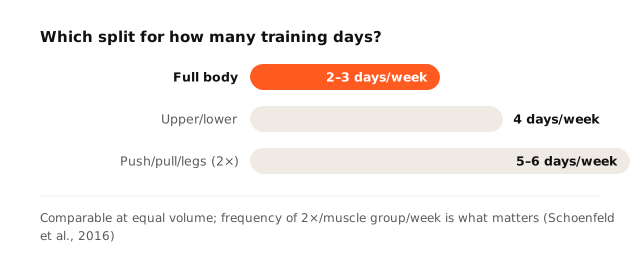
The classic bro split (each muscle group once per week) generally comes off worse in the current literature than higher-frequency setups. With three to six training days available, upper/lower splits or push/pull/legs splits run twice through per week deliver frequencies just as favorable as full-body programs.
| Schedule | Recommendation |
|---|---|
| 2–3 days / week | Full body |
| 4 days / week | Upper/lower |
| 5–6 days / week | Push/pull/legs (2×) |
Log your workouts in 5 seconds with GymLog AI
GymLog AI generates training plans that fit your schedule — whether you train 2 or 6 days per week.
Download on the App StoreSources
- Schoenfeld, B. J., et al. (2015). Influence of resistance training frequency on muscular adaptations in well-trained men. J Strength Cond Res, 29(7). PubMed
- Schoenfeld, B. J., Ogborn, D. & Krieger, J. W. (2016). Effects of resistance training frequency on measures of muscle hypertrophy. Sports Medicine, 46(11).