Unilateral vs. bilateral training: which is better?
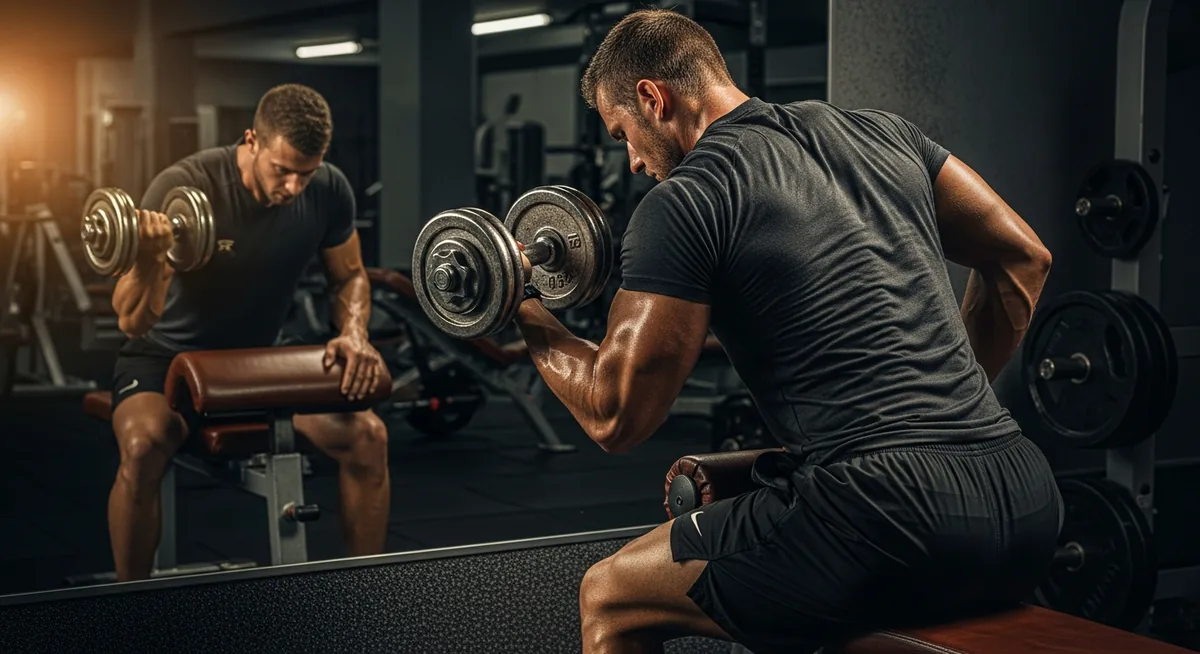
Unilateral exercises (one leg/arm at a time) produce hypertrophy similar to bilateral ones, but are better at correcting muscular imbalances and place greater demands on the stabilizing muscles. For maximal strength development, bilateral compound lifts remain the gold standard.
What unilateral training means
Unilateral training loads one side of the body independently of the other — think lunges, Bulgarian split squats, single-arm dumbbell rows, or single-leg deadlifts. Bilateral training moves both sides simultaneously under the same load — the classic barbell squat, deadlift, or bench press.
Comparing the effects
The two approaches aren't opposites — they trade off on different qualities. Here's how they compare at matched training volume:
| Criterion | Unilateral | Bilateral |
|---|---|---|
| Hypertrophy | Equivalent | Equivalent |
| Maximal strength | Slightly lower | Higher |
| Left/right imbalances | Better | Limited |
| Stability & core demand | Considerably higher | Lower |
| Total load per set | Lower | Higher |
| Time efficiency | Lower | Higher |
What the evidence shows
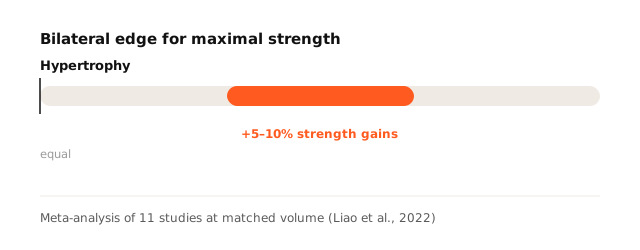
A meta-analysis by Liao et al. (2022) compared unilateral and bilateral strength training across 11 controlled studies. Hypertrophy gains were statistically indistinguishable. For maximal strength, bilateral movements showed a slight edge — typically around 5 to 10 percent greater strength gains at matched volume. Unilateral exercises, on the other hand, were clearly more effective at reducing side-to-side strength asymmetries.
When unilateral training is commonly used
Unilateral exercises are commonly used to train each side separately and even out differences between left and right.
- Correcting imbalances: A stronger side can't take over, so each limb has to do its own work — the most reliable way to close a left-right gap.
- Sport specificity: Running, jumping, and most sports are single-leg movements — the carryover is greater.
- Stability & core: Bulgarian split squats and single-arm rows demand far more anti-rotation work from the core than their bilateral counterparts.
- Limited equipment or home training: Working one limb at a time lets you fully stimulate a muscle with lighter dumbbells — useful when heavy loading isn't available.
A simple way to picture it: most bilateral lifts have a unilateral counterpart — squat → Bulgarian split squat, bench press → single-arm dumbbell press, barbell row → single-arm row.
When bilateral training wins
Per NSCA recommendations, bilateral compound lifts are more efficient when pure strength building on limited time is the goal. The heavier loads in the squat and deadlift create a stronger hypertrophy stimulus per unit of time. Bilateral movements also place greater demands on the central nervous system, which matters for powerlifters and athletes chasing 1RM increases.
The optimal combination
For most lifters, a combination makes the most sense: two to three bilateral compound lifts as the weekly foundation, plus one or two unilateral exercises per muscle group. A typical leg day might consist of squats, Romanian deadlifts, and Bulgarian split squats — bilateral for strength, unilateral for imbalances. Which way you lean depends on your goal and sport: powerlifters and anyone chasing a 1RM weight bilateral work heavily, while field-sport athletes and lifters evening out a weaker side lean more unilateral.
Log your workouts in 5 seconds with GymLog AI
GymLog AI automatically distinguishes unilateral and bilateral exercises and shows side-specific volume — essential when you're correcting imbalances.
Download on the App StoreSources
- Liao, K. F., et al. (2022). Effects of Unilateral vs. Bilateral Resistance Training Interventions on Measures of Strength, Jump, Linear and Change of Direction Speed: A Systematic Review and Meta-Analysis. Biology of Sport. PubMed
- Škarabot, J., et al. (2016). The Bilateral Deficit in Maximal Force Production. J Strength Cond Res. PubMed
- Speirs, D. E., et al. (2016). Unilateral vs. Bilateral Squat Training for Strength, Sprints, and Agility in Academy Rugby Players. JSCR. PubMed
- NSCA. Essentials of Strength Training and Conditioning. nsca.com