Muesli vs. cornflakes: calories compared
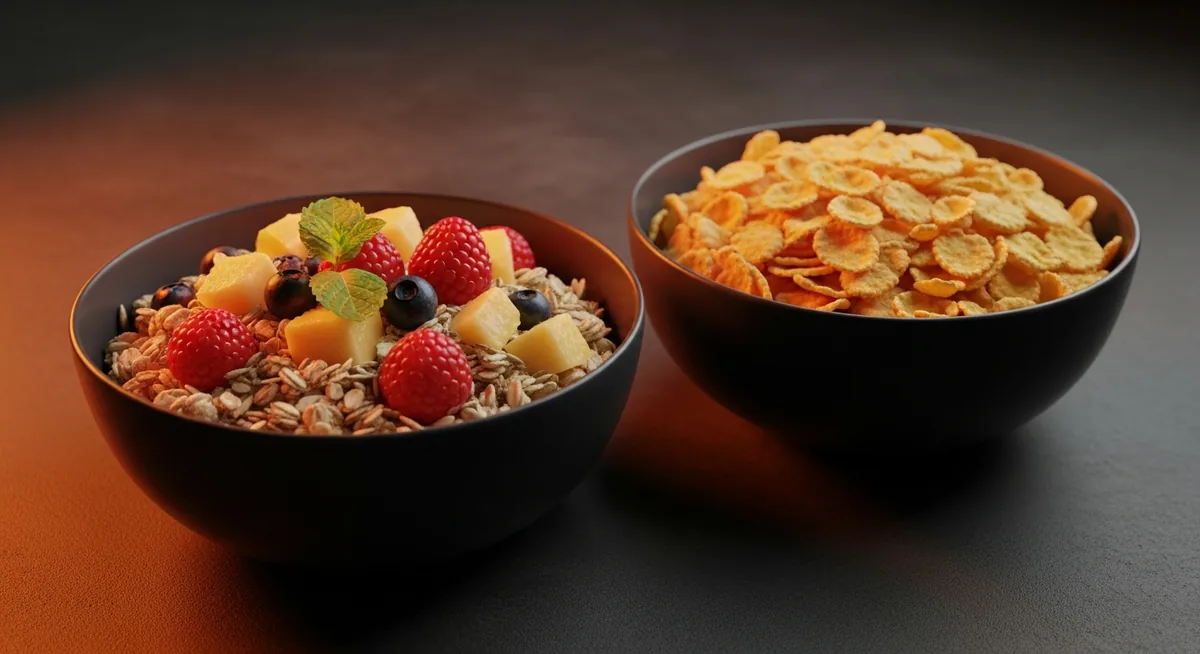
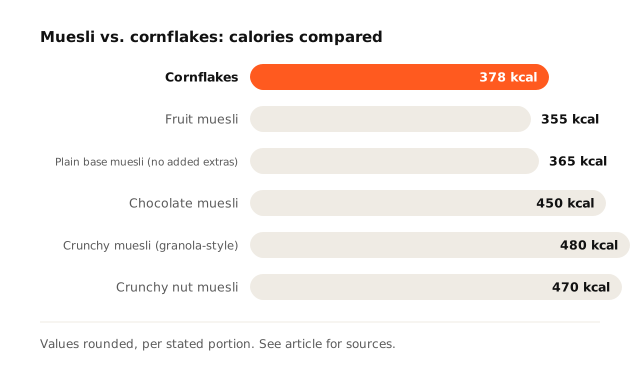
According to the USDA, 100 grams (3.5 oz) of classic cornflakes deliver around 378 calories. Fruit muesli comes to 355, chocolate muesli to 450, and crunchy granola-style muesli even hits 480 calories per 100 grams. Cornflakes are not automatically the lightest breakfast choice.
Breakfast cereals compared
| Type (100 g) | Calories |
|---|---|
| Cornflakes | 378 kcal |
| Fruit muesli | 355 kcal |
| Plain base muesli (no added extras) | 365 kcal |
| Chocolate muesli | 450 kcal |
| Crunchy muesli (granola-style) | 480 kcal |
| Crunchy nut muesli | 470 kcal |
Why the portion size deceives
The recommended serving printed on most cereal boxes is 30 to 40 grams. In reality, adults pour 60 to 90 grams into the bowl on average, as an analysis by Versluis and Papies (2016) showed. A standard breakfast of 80 grams of chocolate muesli with 200 ml of whole milk therefore lands at around 490 calories — before toppings like banana or honey are added.
Sugar content in detail
The biggest difference between varieties lies in the sugar content. According to the Bundeslebensmittelschlüssel (BLS) — Germany’s national food composition database — classic cornflakes contain around 8 grams of sugar per 100 grams, while sweetened varieties like Frosties or Honey Pops run to 30 to 35 grams. Chocolate and crunchy mueslis often reach 25 to 30 grams per 100 grams. In its 2015 sugar guideline, the WHO recommends keeping free sugars below 10 percent of daily energy intake — a single breakfast portion of chocolate muesli can use up that entire allowance on its own.
Muesli and muscle growth
Most classic mueslis and cornflakes are low in protein: they rarely exceed 10 grams of protein per 100 grams. For a filling post-workout breakfast, the ISSN recommends a serving of 20 to 40 grams of protein. To hit that target with muesli, you would typically top up the base with low-fat quark (a German fresh dairy cheese), Greek yogurt, or a whey shake.
Porridge as the alternative
Porridge made from 50 grams of oats with 250 ml of milk delivers around 350 calories and roughly 15 grams of protein. At a comparable calorie count, that protein share is clearly higher than in most ready-made mueslis. On top of that, oats contain beta-glucans, which an assessment by Germany’s Federal Institute for Risk Assessment (BfR) credits with an LDL-cholesterol-lowering effect.
Start tracking calories with GymLog AI
GymLog AI automatically tells muesli, cornflakes, and porridge apart and converts your breakfast bowl into your daily budget in seconds.
Download on the App StoreSources
- USDA FoodData Central. Cereals ready-to-eat. fdc.nal.usda.gov
- Max Rubner Institute. Bundeslebensmittelschlüssel (BLS), version 3.02 — Germany’s national food composition database. blsdb.de
- Atkinson, F. S., et al. (2021). International Tables of Glycemic Index and Glycemic Load Values 2021. Am J Clin Nutr. PubMed
- Versluis, I., Papies, E. K. (2016). Eating less from bigger packs: Preventing the pack size effect with diet primes. Appetite. PubMed
- World Health Organization (2015). Sugars intake for adults and children. Guideline. who.int