How many calories are in a croissant?
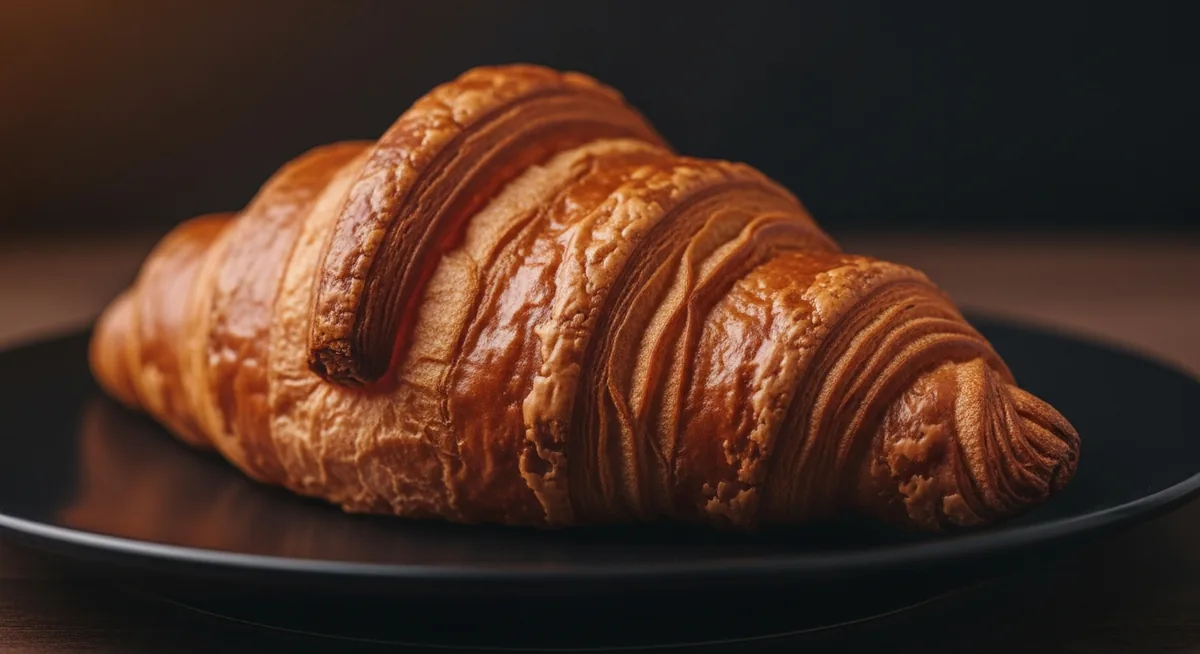
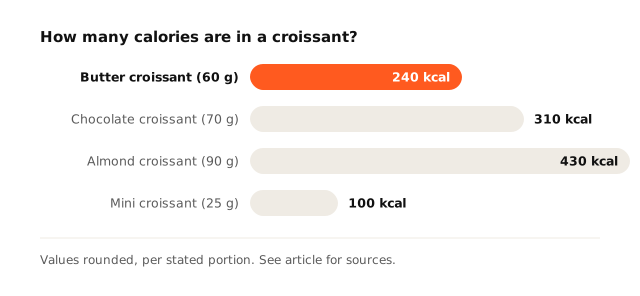
A classic 60-gram (2.1 oz) butter croissant delivers around 240 calories, according to the USDA. Chocolate and almond croissants run between 300 and 430 calories depending on the filling — a single pastry can account for roughly a fifth of a woman’s daily energy needs.
Croissant varieties compared
| Variety (per piece) | Calories |
|---|---|
| Butter croissant (60 g) | 240 kcal |
| Chocolate croissant (70 g) | 310 kcal |
| Almond croissant (90 g) | 430 kcal |
| Mini croissant (25 g) | 100 kcal |
Why croissants are so calorie-dense
Croissants are made from laminated pastry dough — dough and butter are folded over each other in multiple layers, so a finished croissant is roughly 25 to 30 percent butter. Per the Bundeslebensmittelschlüssel (BLS) — Germany’s national food composition database — 100 grams of croissant deliver around 406 calories, putting it at the upper end of classic baked goods. That high fat content is exactly what creates the signature flaky layers.
A croissant breakfast
A typical café breakfast with a butter croissant, jam, a latte, and a glass of orange juice adds up to around 650 to 750 calories. Pick a chocolate croissant instead and you quickly pass 800 calories — with barely any protein to show for it. Per the USDA, croissants contain only around 8 grams of protein per 100 grams, which usually is not enough for a filling breakfast in a calorie deficit.
Croissants and muscle growth
For building muscle, a croissant on its own is a poor fit simply because of its macro split. At 240 calories per piece, it provides only around 5 grams of protein but 12 grams of fat. In its position stand on protein intake for athletes, the ISSN recommends 0.3 to 0.4 grams of protein per kilogram of body weight per meal — a croissant does not come close to that threshold.
Start tracking calories with GymLog AI
GymLog AI spots croissants and pastries in a photo and automatically logs butter, chocolate, or almond croissants against your daily budget.
Download on the App StoreSources
- USDA FoodData Central. Croissants, butter. fdc.nal.usda.gov
- Max Rubner Institute. Bundeslebensmittelschlüssel (BLS), version 3.02 — Germany’s national food composition database. blsdb.de
- Jäger, R., et al. (2017). International Society of Sports Nutrition Position Stand: protein and exercise. JISSN. PubMed
- German Federal Center for Nutrition (BZfE). Baked goods — product guide. bzfe.de