How many calories are in quark?
Quark — a thick, high-protein fresh cheese popular in Germany, similar to Greek yogurt — delivers around 67 kcal per 100 g (3.5 oz) in its low-fat version, with 12 g of protein and under 0.5 g of fat, according to the German BLS food database. Medium-fat quark (20% fat in dry matter) comes to 110 kcal/100 g, cream quark (40%) to 160 kcal/100 g.
Quark grades by fat content
Germany’s dairy products regulation classifies quark by fat content in dry matter. Protein content drops as the fat share rises, because a larger portion of the product consists of milk fat rather than milk protein. For a high-protein diet, low-fat quark is the usual pick thanks to its high protein content at a lower calorie cost.
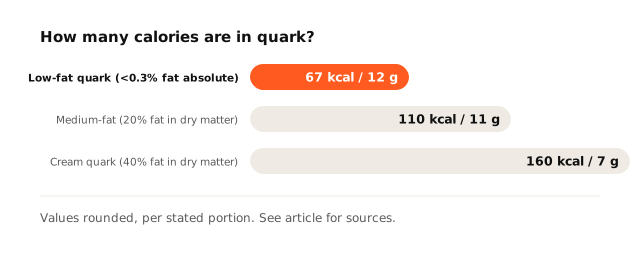
| Grade | Calories / protein per 100 g |
|---|---|
| Low-fat quark (<0.3% fat absolute) | 67 kcal / 12 g |
| Medium-fat (20% fat in dry matter) | 110 kcal / 11 g |
| Cream quark (40% fat in dry matter) | 160 kcal / 7 g |
Why low-fat quark is a strength-training staple
At 12 g of protein per 100 g, low-fat quark offers one of the highest protein densities of any natural dairy product. Around 80 percent of that protein is casein — a slow-digesting milk protein that, according to Res et al. (2012), releases amino acids into the bloodstream over several hours. That makes low-fat quark especially well suited as an evening meal or a final protein source before sleep.
Fruit quark and calorie density
Commercial fruit quark contains added sugar and lands at 100 to 130 kcal per 100 g. Blending in the fruit preparation also drags the protein down to 6 to 8 g per 100 g. Homemade quark with fresh berries, sweetener, or cinnamon hits similar calories with considerably more protein.
Quark vs. skyr vs. Greek yogurt
Skyr is calorically close to low-fat quark (63 kcal / 11 g protein per 100 g) but tastes milder thanks to its lower acidity. Low-fat Greek yogurt comes in at around 60 kcal and 10 g of protein per 100 g. In a calorie deficit, all three are practically interchangeable — the choice comes down to taste.
Start tracking calories with GymLog AI
GymLog AI knows low-fat, medium-fat, and cream quark — and automatically applies the right protein values.
Download on the App StoreSources
- Max Rubner Institute. Bundeslebensmittelschlüssel (BLS) — Germany’s national food composition database. blsdb.de
- Res, P. T., et al. (2012). Protein ingestion before sleep improves postexercise overnight recovery. Med Sci Sports Exerc. PubMed
- German Nutrition Society (DGE). Milk and dairy products in the diet. dge.de
- German Dairy Products Regulation (Milcherzeugnisverordnung). gesetze-im-internet.de