Cheese calorie comparison
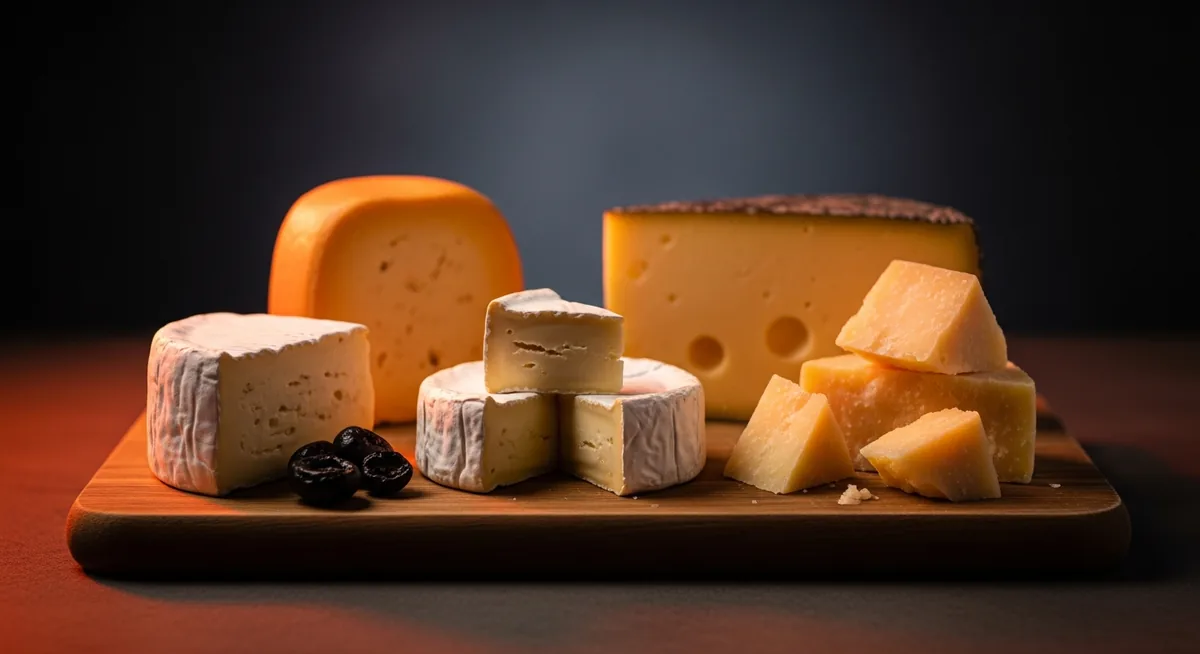
According to the German BLS food database, cottage cheese delivers around 100 kcal per 100 g (3.5 oz) — the lowest-calorie option. Hard cheeses like Gouda or Parmesan sit at 350 to 400 kcal per 100 g. Fat content determines the calorie density almost entirely.
Cheese varieties by calorie density
The differences between cheese varieties come down primarily to fat content and water content. Fresh-cheese styles hold a lot of water and therefore land lower, while hard cheeses become concentrated through aging.
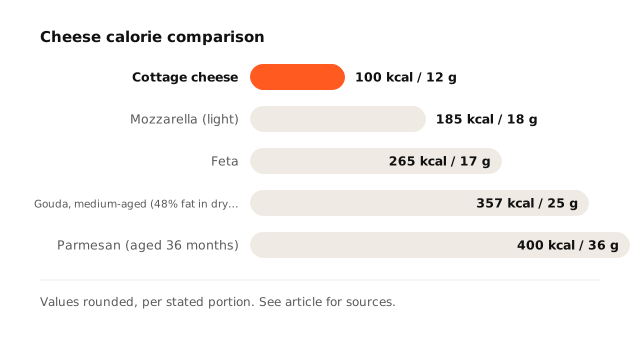
| Variety | Calories / protein per 100 g |
|---|---|
| Cottage cheese | 100 kcal / 12 g |
| Mozzarella (light) | 185 kcal / 18 g |
| Feta | 265 kcal / 17 g |
| Gouda, medium-aged (48% fat in dry matter) | 357 kcal / 25 g |
| Parmesan (aged 36 months) | 400 kcal / 36 g |
Why cottage cheese is so low in calories
According to the BLS, cottage cheese is roughly 80 percent water. Its protein content remains meaningful at 12 g per 100 g, while its fat content of 4 g sits well below that of hard cheese. For strength training, cottage cheese is one of the most efficient protein-snack options around: a 200-g tub delivers 24 g of protein for just 200 calories.
How to read fat-content labels
German cheese labels state "F.i.Tr." — fat in dry matter — which refers only to the water-free portion of the cheese. A Gouda labeled "48% fat i.d.m." actually contains around 28 percent fat in absolute terms; the rest is water, protein, and minerals. A label stating the absolute fat content would reflect the real value, but retailers rarely use it.
Vegetarian and vegan alternatives
Vegan cheese based on coconut fat or starch comes to 280 to 330 kcal per 100 g, per USDA reference values, but usually contains less than 3 g of protein. That rules vegan cheese out as a protein substitute — tofu, tempeh, or protein-fortified alternatives are far more efficient.
Start tracking calories with GymLog AI
GymLog AI tells cheese varieties apart by fat level and shows protein per portion — with realistic sprinkle amounts included.
Download on the App StoreSources
- Bundeslebensmittelschlüssel (BLS) — Germany’s national food composition database. Max Rubner Institute. blsdb.de
- USDA FoodData Central. Cheese, various varieties. fdc.nal.usda.gov
- German Nutrition Society (DGE). Milk and dairy products. dge.de
- Käseverordnung (German Cheese Ordinance). gesetze-im-internet.de