How much fiber per day is optimal?
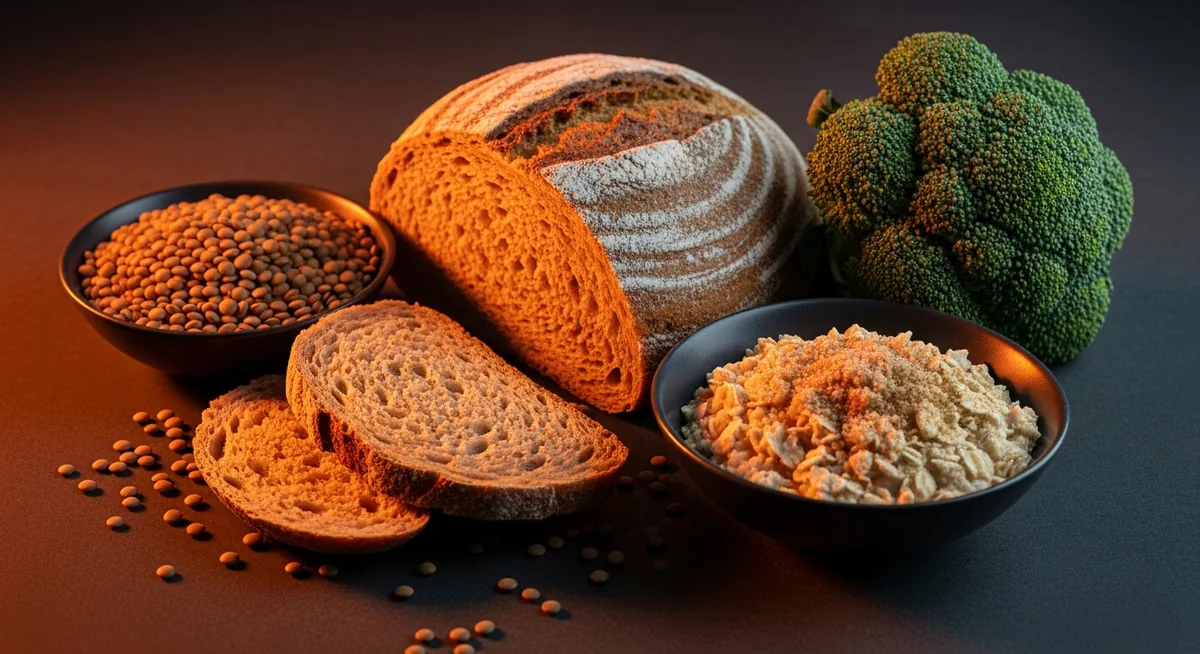
The German Nutrition Society (DGE) recommends that adults eat at least 30 grams of fiber per day. The WHO cites 25 g as the minimum. During dieting phases, high-fiber foods are often favored for their strong satiety effect and how easily they fit into everyday eating.
What fiber does in your digestive tract
Dietary fiber consists of indigestible carbohydrates that bind water in the digestive tract, regulate intestinal transit, and serve as a substrate for the gut microbiota. Fermentation in the colon produces short-chain fatty acids that fuel the cells of the intestinal lining (EFSA, Scientific Opinion 2010). Fiber is broadly divided into soluble types (such as oat beta-glucan and pectin) and insoluble types (such as cellulose from whole grains).
The official recommendations
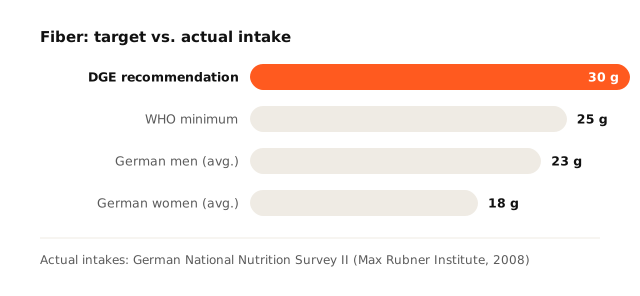
The German Nutrition Society (DGE) recommends at least 30 g of fiber per day for adults. The World Health Organization (WHO, 2023) sets the floor at 25 g and points out that the majority of Western populations fall short of even that. According to the German National Nutrition Survey II (Max Rubner Institute, 2008), average fiber intake in Germany sits at 23 g per day for men and 18 g per day for women — both below the DGE recommendation.
| Food (100 g) | Fiber |
|---|---|
| Lentils (dried) | 17 g |
| Rolled oats | 10 g |
| Broccoli | 3 g |
Why it matters for athletes
In the context of a hypocaloric diet, high-fiber foods are frequently chosen for their strong satiety effect and everyday practicality. In a review, Slavin (2005) describes how fiber-rich meals slow gastric emptying, and studies show smaller post-meal blood sugar spikes as a result. For athletes who eat right before training, however, large amounts of fiber can cause gastrointestinal discomfort — here, leaving a gap of at least 2 hours is the sensible move.
Start tracking your calories with GymLog AI
Alongside calories and macros, GymLog AI also tracks your fiber intake — automatically.
Download on the App StoreSources
- German Nutrition Society (DGE) (2019). Reference values — dietary fiber. DGE
- EFSA (2010). Scientific Opinion on Dietary Reference Values for Carbohydrates and Dietary Fibre. EFSA Journal, 8(3), 1462. EFSA
- WHO (2023). Healthy Diet — Fact Sheet. WHO
- Slavin, J. L. (2005). Dietary Fiber and Body Weight. Nutrition, 21(3), 411–418. PubMed
- Max Rubner Institute (2008). German National Nutrition Survey II — Results Report Part 2. BMEL