How much protein do you need in a calorie deficit?
In a calorie deficit, the literature typically cites higher protein intakes than during maintenance — often in the range of 2.0 to 2.4 grams per kilogram of fat-free mass.
Protein calculator
Evidence-based range per the ISSN position stand (Jäger et al., 2017).
Why protein needs rise in a deficit
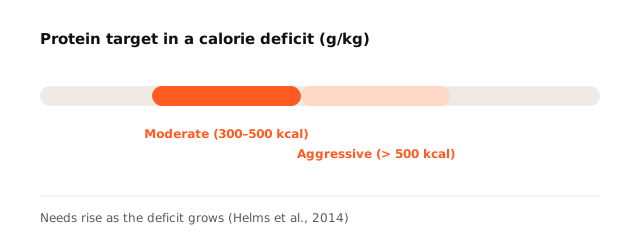
When calories are restricted, the body increasingly taps its own protein structures for energy. A higher protein intake reduces that breakdown. In their systematic review of natural dieting in athletes, Helms et al. (2014) analyzed intakes of 2.3 to 3.1 g/kg of fat-free body mass, depending on the size of the deficit and the athlete’s body fat percentage.
The controlled evidence
In a randomized intervention trial, Longland et al. (2016) compared two groups in a steep calorie deficit: 1.2 g/kg versus 2.4 g/kg of protein, with identical strength training. Individual intervention studies have shown differences between higher and lower protein intakes under certain conditions.
| Deficit | Protein target |
|---|---|
| Moderate (300–500 kcal) | 1.8–2.2 g/kg |
| Aggressive (> 500 kcal) | 2.2–2.6 g/kg |
Keep your protein on track with GymLog AI
GymLog AI automatically adjusts your protein targets to your current calorie deficit and logs every meal via chat or photo.
Download on the App StoreSources
- Helms, E. R., Aragon, A. A., & Fitschen, P. J. (2014). Evidence-based recommendations for natural bodybuilding contest preparation: nutrition and supplementation. JISSN, 11:20. jissn.biomedcentral.com
- Longland, T. M., et al. (2016). Higher compared with lower dietary protein during an energy deficit combined with intense exercise promotes greater lean mass gain and fat mass loss. Am J Clin Nutr, 103(3). PubMed
- Pasiakos, S. M., et al. (2013). Effects of high-protein diets on fat-free mass and muscle protein synthesis following weight loss. FASEB J, 27(9). PubMed
- Jäger, R., et al. (2017). ISSN Position Stand: Protein and Exercise. JISSN, 14:20.