What is a training split?
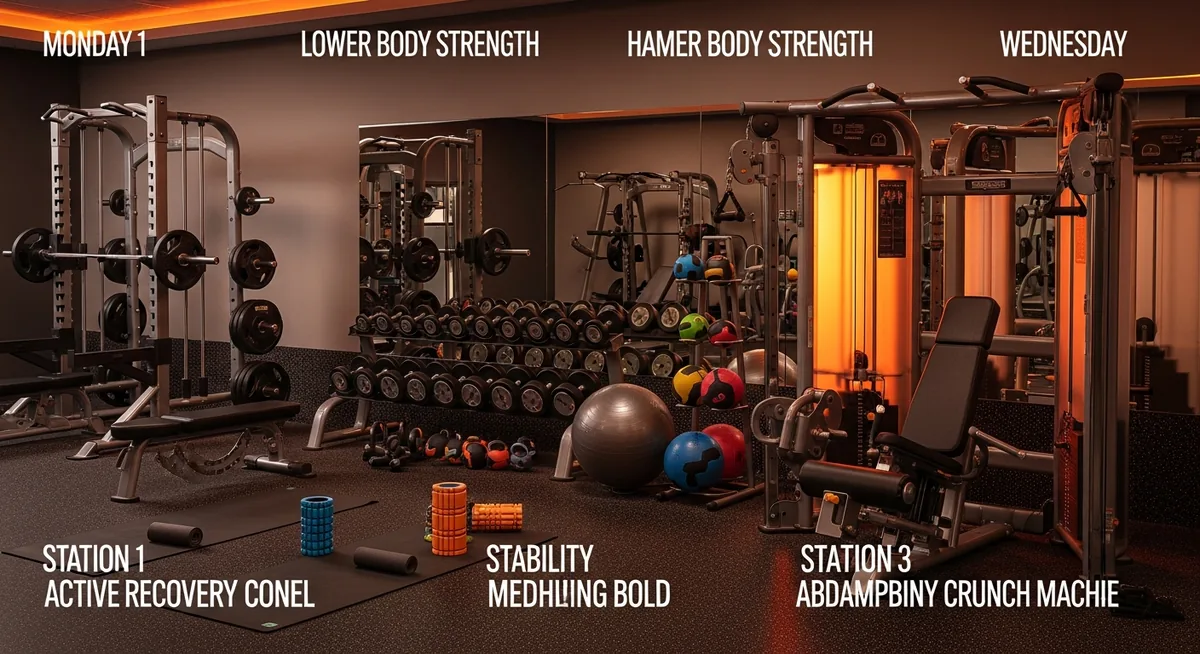
A training split is a workout structure in which each session trains only part of your musculature — for example, upper body and lower body on separate days. The goal is to give individual muscle groups more volume or more recovery.
How it differs from full-body training
In full-body training, every session hits all the major muscle groups. With a split, the weekly workload is spread across multiple sessions, so each muscle group is trained less often but with more volume per session. Typical variations include the upper/lower split (2-day split) and push/pull/legs (3-day split).
How splits compare in practice
It isn't the split that determines muscle growth — it's the total weekly volume per muscle group. A meta-analysis on training frequency found comparable hypertrophy gains between split and full-body programs when volume was matched (Schoenfeld, Ogborn & Krieger, 2016).
When a split makes sense
Split programs are most useful when you can train more than three times per week, or when your per-muscle-group volume is very high. For beginners training two to three times per week, the ACSM position stand typically recommends full-body programs, since every muscle group then gets stimulated multiple times per week (Ratamess et al., 2009).
Log your workouts in 5 seconds with GymLog AI
GymLog AI detects your split automatically and shows your volume per muscle group across the week.
Download on the App StoreSources
- Schoenfeld, B. J., Ogborn, D., Krieger, J. W. (2016). Effects of Resistance Training Frequency on Measures of Muscle Hypertrophy: A Systematic Review and Meta-Analysis. Sports Medicine, 46(11). PubMed
- Ratamess, N. A., et al. (2009). Progression Models in Resistance Training for Healthy Adults (ACSM Position Stand). Medicine & Science in Sports & Exercise, 41(3). PubMed
- Grgic, J., Schoenfeld, B. J., Latella, C. (2018). Effects of Resistance Training Frequency on Gains in Muscular Strength: A Systematic Review and Meta-Analysis. Sports Medicine, 48(5). PubMed