How many calories are in coffee with milk?
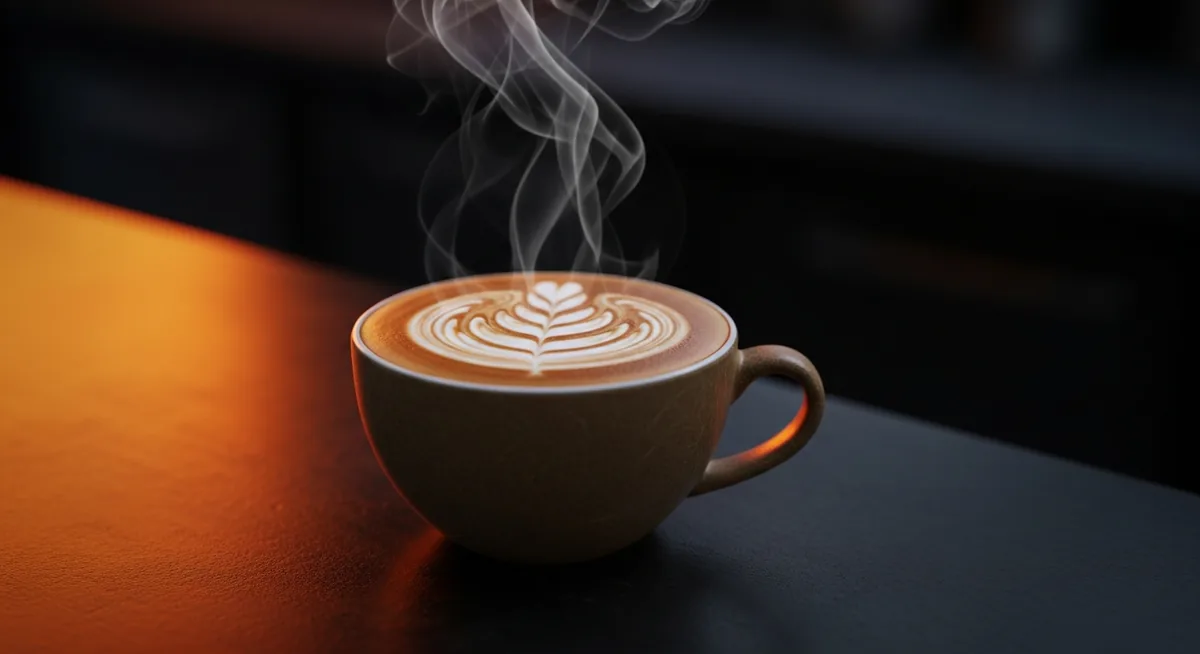
A cappuccino made with whole milk (3.5% fat) delivers around 80 kcal, a latte macchiato 150 kcal. A coffee to go with syrup and whipped cream can hit 400 to 500 calories — more than a small meal.
Coffee drinks compared on calories
Black coffee is practically calorie-free (2 kcal/100 ml). Nearly all the calories come from milk, syrup, and cream. The values below are based on typical preparations with 3.5% whole milk and a standard espresso base.
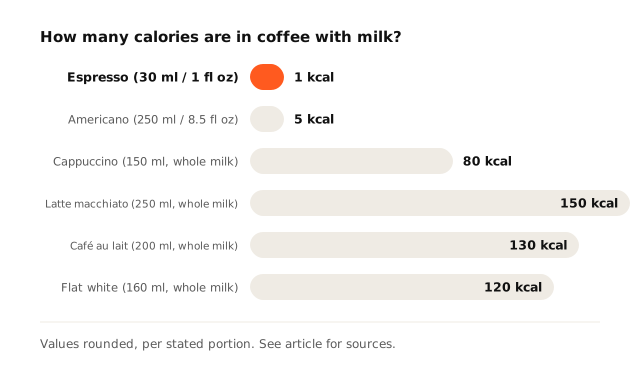
| Drink | Calories per serving |
|---|---|
| Espresso (30 ml / 1 fl oz) | 1 kcal |
| Americano (250 ml / 8.5 fl oz) | 5 kcal |
| Cappuccino (150 ml, whole milk) | 80 kcal |
| Latte macchiato (250 ml, whole milk) | 150 kcal |
| Café au lait (200 ml, whole milk) | 130 kcal |
| Flat white (160 ml, whole milk) | 120 kcal |
Coffee to go with syrup — the calorie trap
A typical pumpkin spice latte or caramel macchiato from a coffee chain contains 350 to 500 calories per large cup (473 ml / 16 fl oz), per the chains’ own nutrition data. Flavor syrup (20 ml ≈ 80 kcal), whipped cream (30 g ≈ 100 kcal), and whole milk add up fast. A drink like that contains 40 to 50 g of sugar on average — close to the WHO’s entire daily recommendation for free sugars.
Plant-based milk in coffee
Oat milk (45 kcal/100 ml) sits between low-fat and whole milk. Soy milk (37 kcal/100 ml) brings extra protein (3 g/100 ml) and turns a cappuccino into a protein-rich drink. Unsweetened almond milk (17 kcal/100 ml) is the lowest-calorie option but contains barely any macronutrients.
Sugar in coffee
One teaspoon of sugar (4 g) delivers 16 calories. Two coffees a day with two teaspoons each add up to 64 calories and 16 g of sugar daily — about a third of the WHO daily recommendation for free sugars (50 g at a 2,000 kcal daily requirement). Sweeteners such as stevia or erythritol can serve as alternatives.
Start tracking calories with GymLog AI
GymLog AI calculates your cappuccino or latte with the milk you actually use and accounts for syrup, cream, and sugar.
Download on the App StoreSources
- Max Rubner Institute. Bundeslebensmittelschlüssel (BLS) — Germany’s national food composition database. blsdb.de
- USDA FoodData Central. Coffee, brewed, espresso, with milk. fdc.nal.usda.gov
- WHO. Guideline: Sugars intake for adults and children. who.int
- German Nutrition Society (DGE). Sugar reduction in foods. dge.de