How many calories are in cola?
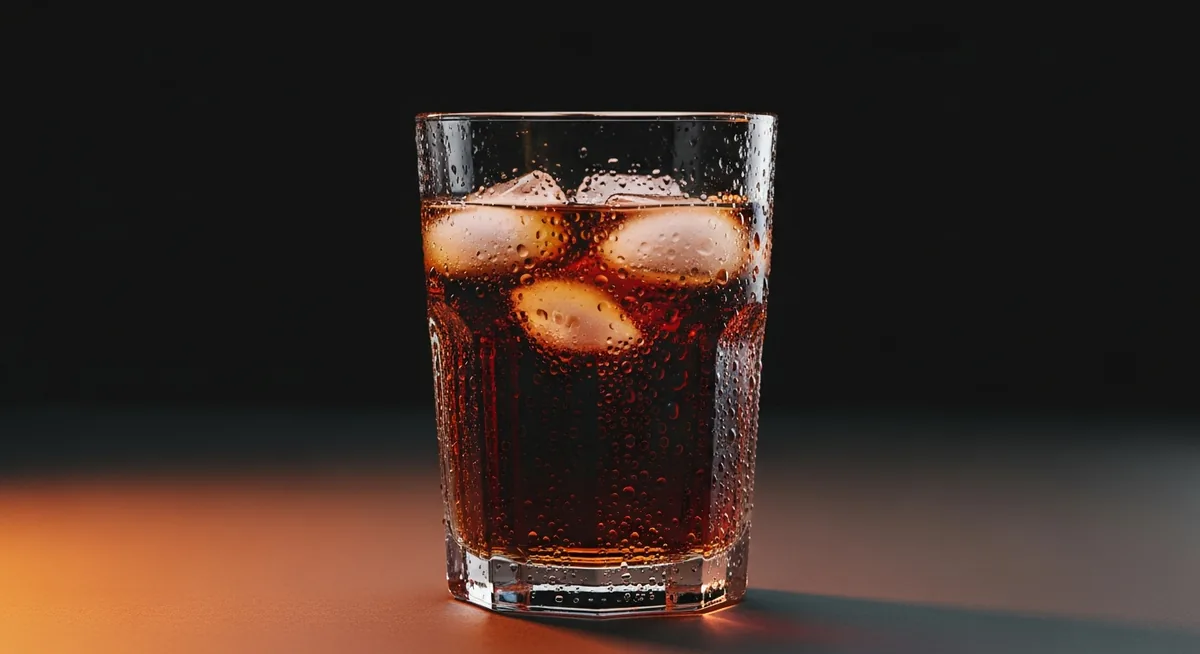
Regular cola delivers around 42 kcal per 100 ml and 10.6 g of sugar, per manufacturer figures. A 0.5 l (17 fl oz) bottle therefore packs 210 calories and 53 g of sugar. Cola Zero and Light are virtually calorie-free (under 1 kcal/100 ml).
Calories and sugar in cola varieties
Cola ranks among the most-consumed sugar-sweetened drinks in Germany. The recipes vary only minimally between brands; the nutrition values are practically uniform. Cola mainly delivers sugar and calories, which is why most dietary guidelines treat it with reserve.
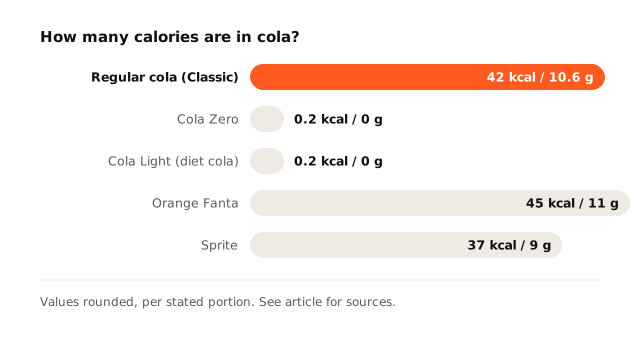
| Variety | Calories / sugar per 100 ml |
|---|---|
| Regular cola (Classic) | 42 kcal / 10.6 g |
| Cola Zero | 0.2 kcal / 0 g |
| Cola Light (diet cola) | 0.2 kcal / 0 g |
| Orange Fanta | 45 kcal / 11 g |
| Sprite | 37 kcal / 9 g |
Sweeteners in Zero and Light varieties
Cola Zero and Light use sweeteners such as aspartame, acesulfame-K, and sucralose. The EFSA has classified these substances as safe and set ADI values (aspartame: 40 mg per kg of body weight per day). For a 70 kg (154 lb) adult, that works out to roughly 14 liters of diet cola daily — far beyond any realistic intake. As for how sweeteners affect weight and metabolism, a meta-analysis by Rios-Leyvraz & Montez (2022) for the WHO describes the evidence as "inconclusive."
Cola in the context of your calorie balance
Liquid calories are less filling than solid food, according to Mourao et al. (2007). A cola alongside a meal adds calories without adding satiety — one of the main mechanisms by which sugar-sweetened drinks push the energy balance into surplus. In a calorie deficit, sweetened soft drinks are one of the easiest places to cut.
Cola vs. fruit juice
Fruit juices such as apple juice (45 kcal/100 ml, 10 g sugar) or orange juice (42 kcal/100 ml, 9 g sugar) are practically level with cola on calories. The natural origin of the sugar barely changes its metabolic effect — pulp-free orange juice acts metabolically much like regular cola, according to Malik & Hu (2019).
Start tracking calories with GymLog AI
GymLog AI automatically tells cola varieties and liquid calories apart and shows you their impact on your daily balance.
Download on the App StoreSources
- Max Rubner Institute. Bundeslebensmittelschlüssel (BLS) — Germany’s national food composition database. blsdb.de
- WHO. Guideline: Sugars intake for adults and children. who.int
- EFSA. Scientific Opinion on the re-evaluation of aspartame as a food additive. efsa.europa.eu
- Malik, V. S., & Hu, F. B. (2019). Sugar-sweetened beverages and cardiometabolic health: An update of the evidence. Nutrients. PubMed