How many calories are in pasta?
According to the German BLS food database, 100 grams (3.5 oz) of classic durum-wheat pasta deliver around 358 calories dry, but only about 158 calories cooked. Pasta soaks up roughly 2.5 times its dry weight in water as it cooks.
Dry weight vs. cooked weight
A 100-gram (3.5 oz) portion of dry pasta weighs around 220 to 250 grams after cooking. Since no energy is added in the pot, the cooked portion contains exactly the same calories as the dry one — the per-100-gram figure just looks halved. For an accurate calorie count, weigh your pasta before cooking, or convert back from the cooked weight using a factor of 2.4 to 2.5.
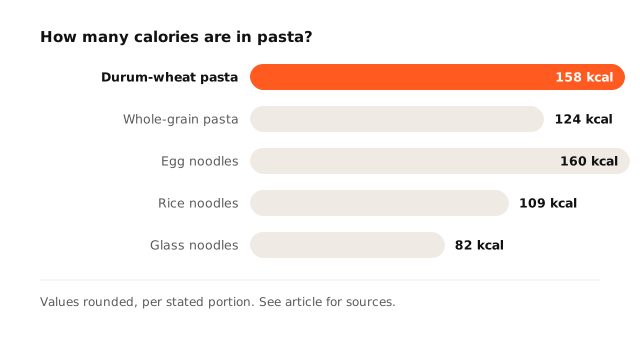
Pasta types compared
| Type (100 g cooked) | Calories |
|---|---|
| Durum-wheat pasta | 158 kcal |
| Whole-grain pasta | 124 kcal |
| Egg noodles | 160 kcal |
| Rice noodles | 109 kcal |
| Glass noodles | 82 kcal |
Pasta dishes with sauce
In classic pasta dishes, the sauce accounts for a substantial share of the total calories. A typical serving of 200 grams (7 oz) of cooked pasta with 150 grams of sauce lands here, per BLS and USDA data:
- Spaghetti Bolognese: around 540 kcal
- Spaghetti Carbonara: around 760 kcal
- Pasta Aglio e Olio: around 470 kcal
- Pasta with tomato sauce: around 420 kcal
- Spaghetti with pesto Genovese: around 680 kcal
Pasta and muscle growth
An 80-gram (2.8 oz) dry-weight portion of durum-wheat pasta provides around 57 grams of carbohydrate, making it a solid choice for refilling muscle glycogen stores after training. In its position stand on carbohydrate intake for strength athletes, the ISSN recommends 3 to 7 grams of carbohydrate per kilogram of body weight per day — depending on your body weight, a big plate of pasta can cover a quarter to a third of that.
Portion size
As a guideline for a main meal, the German Nutrition Society (DGE) suggests 60 to 80 grams (about 2–2.8 oz) of dry pasta, which yields 150 to 200 grams cooked. Restaurant portions of 250 to 350 grams of cooked pasta are common, which already means 400 to 550 calories from the noodles alone — before sauce, cheese, or sides.
Start tracking calories with GymLog AI
GymLog AI spots pasta dishes in a photo and logs noodles, sauce, and toppings separately against your daily budget.
Download on the App StoreSources
- USDA FoodData Central. Pasta, cooked, enriched, without added salt. fdc.nal.usda.gov
- Max Rubner Institute. Bundeslebensmittelschlüssel (BLS), version 3.02 — Germany’s national food composition database. blsdb.de
- German Nutrition Society (DGE). Food amounts and portion sizes. dge.de
- Atkinson, F. S., et al. (2021). International Tables of Glycemic Index and Glycemic Load Values 2021. Am J Clin Nutr. PubMed
- Kerksick, C. M., et al. (2018). ISSN exercise & sports nutrition review update: research & recommendations. JISSN, 15:38. PubMed